Hello everyone,
We're excited to keep you updated on the latest enhancements on Flat. Over the next few months, our tech team will be dedicating their efforts to significantly boosting the performance of our editor. With your invaluable feedback as our guide, we're committed to transforming Flat into a top-tier tool for music composition. During this period, we'll offer additional tips and insights on how to make the most of our most popular features, aiming to elevate your music creation experience to new heights.
In this edition, we will share some tips and tricks for you to master lead sheet creation in our music notation software. Let's check it out!
What is a Lead Sheet in Music
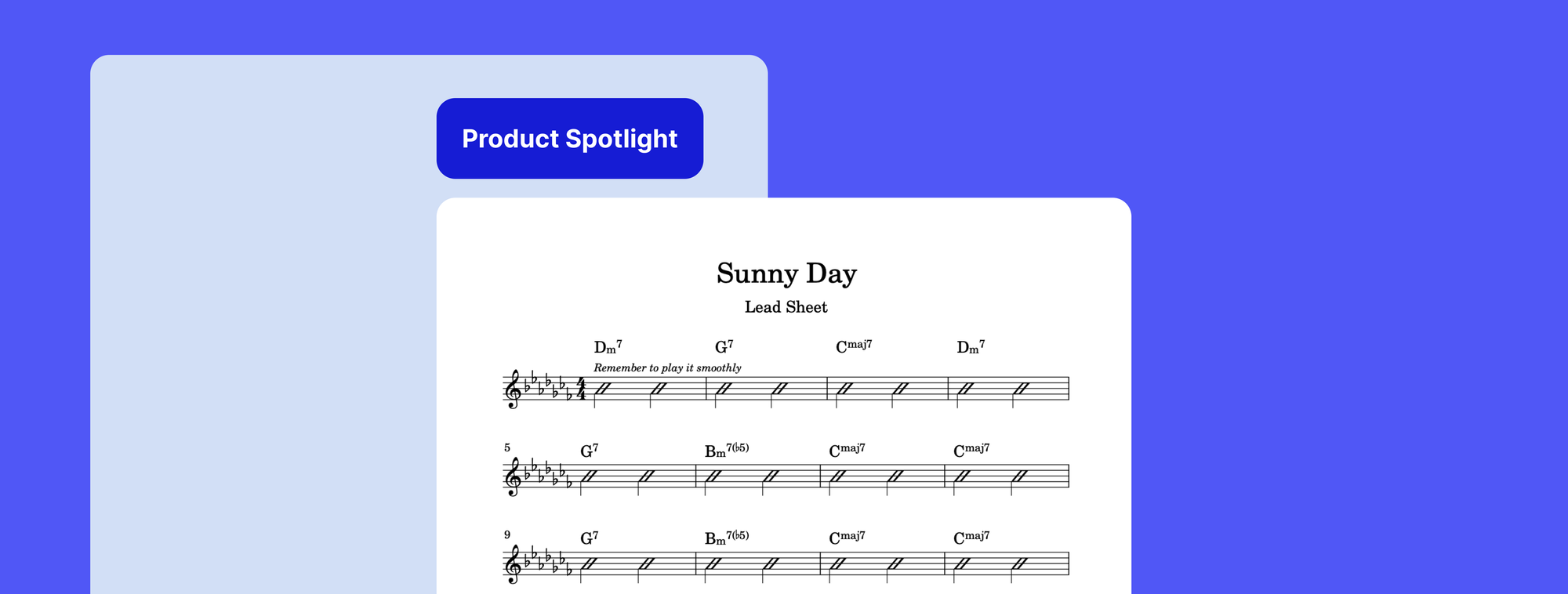
A lead sheet is a basic type of musical notation that includes the melody, chords, and lyrics of a song. It's widely used in jazz and other genres where musicians often improvise, as it provides the essential information needed while allowing for individual interpretation. This simplicity makes lead sheets highly valuable for musicians who need to learn songs quickly or who want the flexibility to adapt pieces to their own style during performances.
The key components of a lead sheet are:
- Melody: Notated on a musical staff, guiding the tuneful element of the song.
- Chords: Shown above the staff, these symbols help musicians play the harmonic background.
- Lyrics: Written below the staff, crucial for songs that are sung.
Lead sheets are common in both rehearsal and live performance settings. They enable musicians to efficiently learn new pieces and provide a quick reference during performances, ensuring a smooth execution of music.
Creating a Lead Sheet in Flat
Creating lead sheets in Flat is really simple. Let's check the most relevant features in our platform to successfully complete this task.
The Key Components of a Lead Sheet in Music
As mentioned above there are 3 key elements when creating a lead sheet: the melody, the chords and the lyrics. Let's check how these elements work on our music notation software.
The melody
In Flat, we offer various methods for inserting your notes. We suggest exploring all of them to find the one that suits you best.
- Click on the staff where you want to insert your notes.
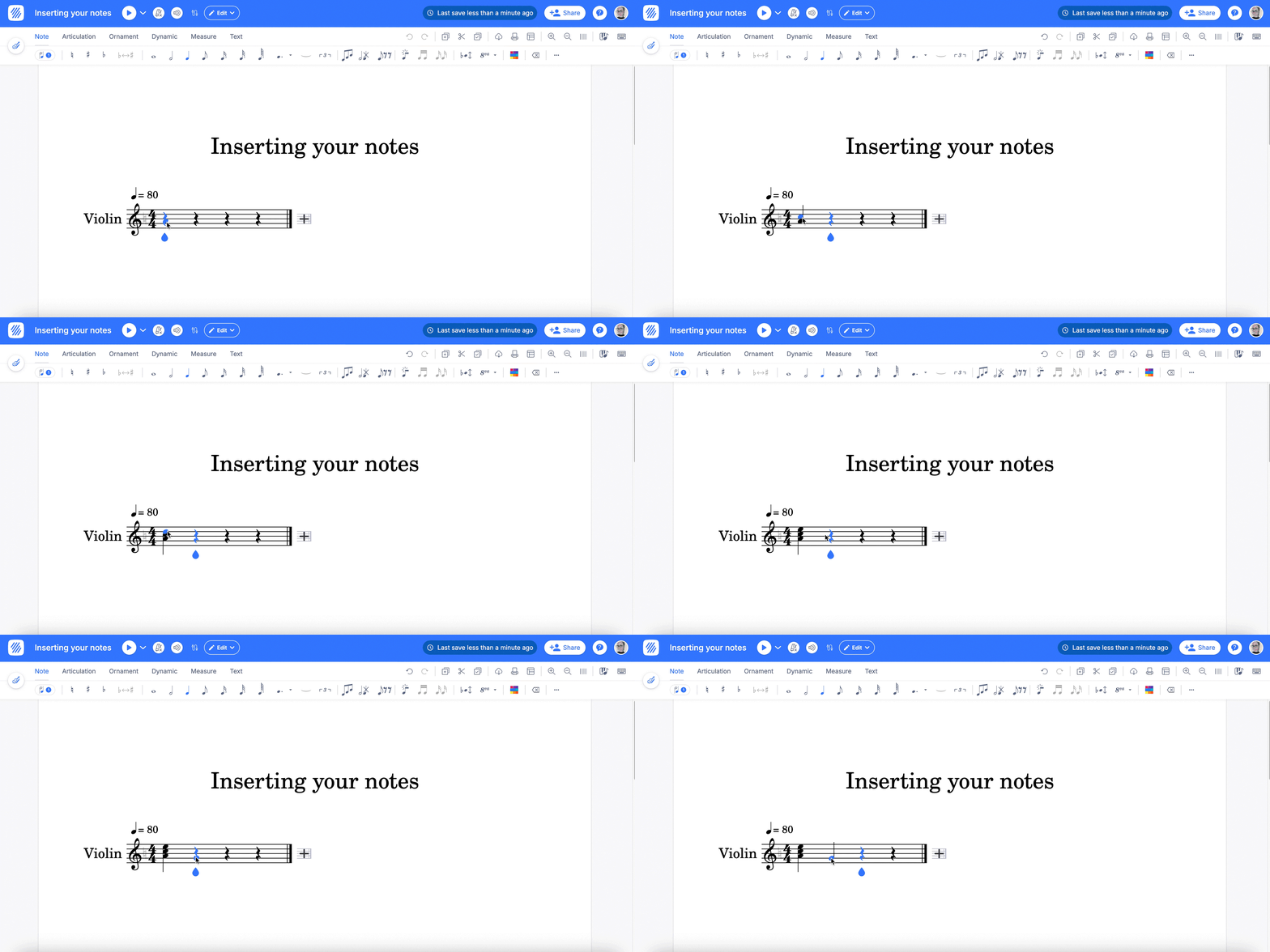
- Use the keyboard shortcuts to insert your notes.
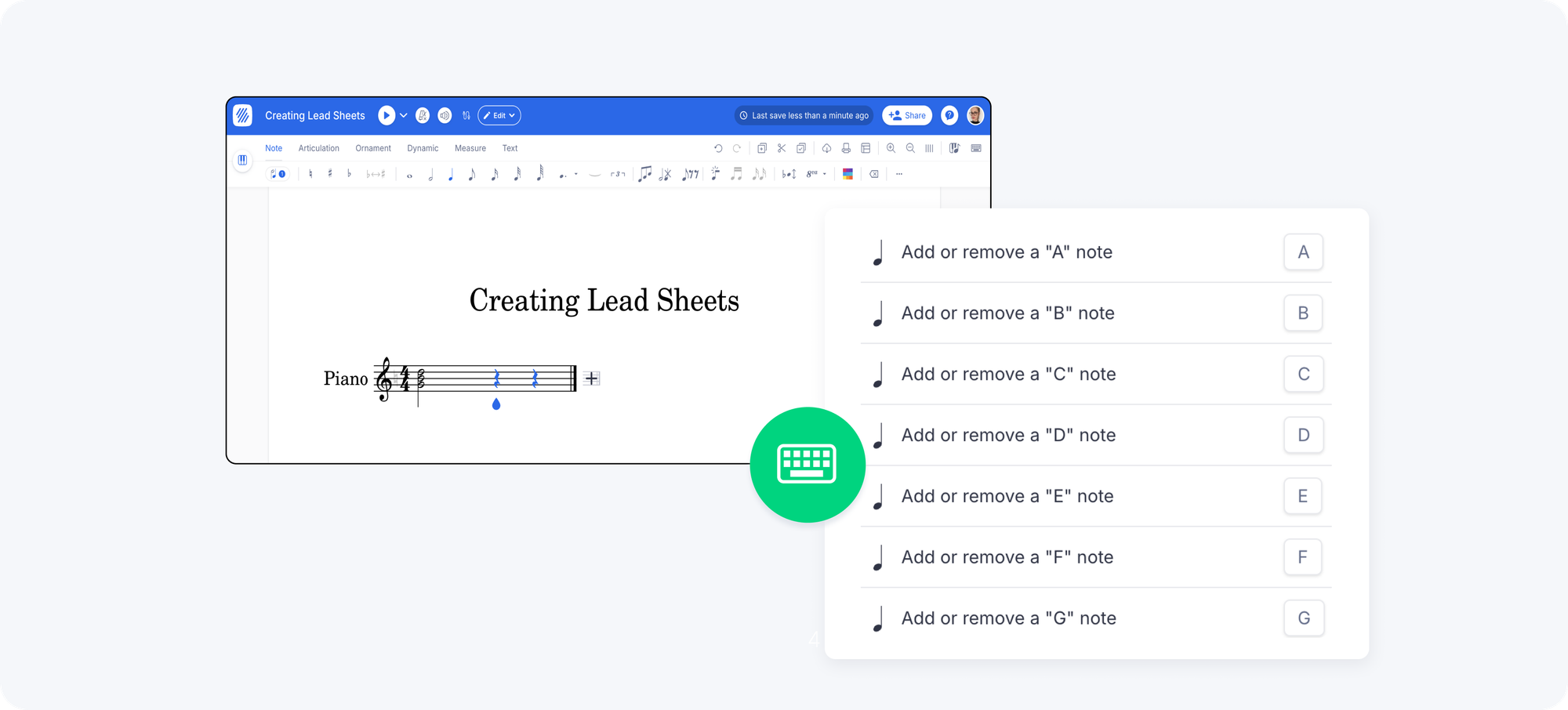
💡 Remember you can customize your keyboard shortcuts > tutorial.
- Use a MIDI device to insert your notes.
You can use your device to play the notes while our editor automatically writes the score for you. Learn all about this feature in our dedicated guide:
The chords
To add the chords in your lead sheet you can use the chord tool in the text toolbar > tutorial.
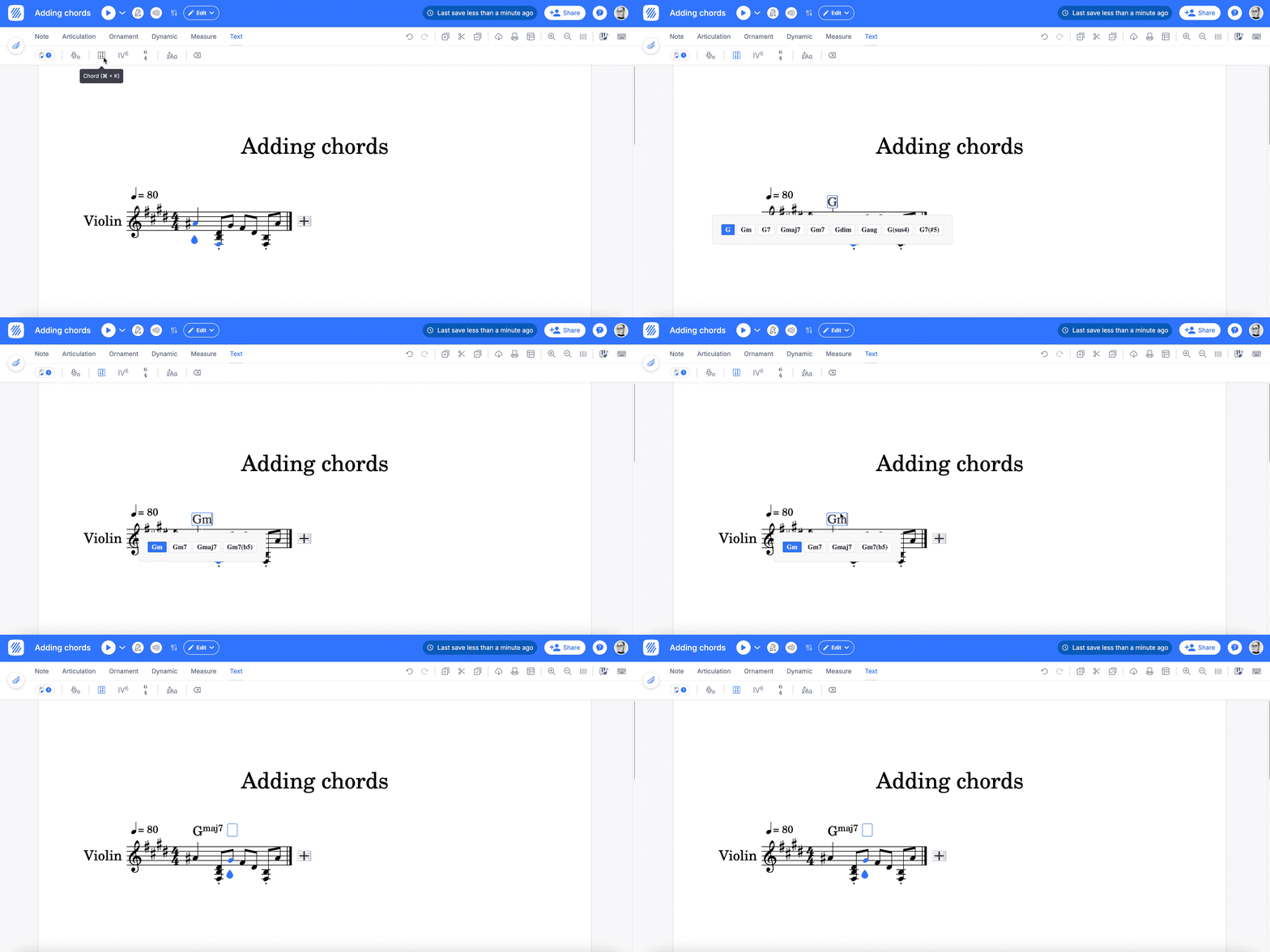
💡 Pro tips:
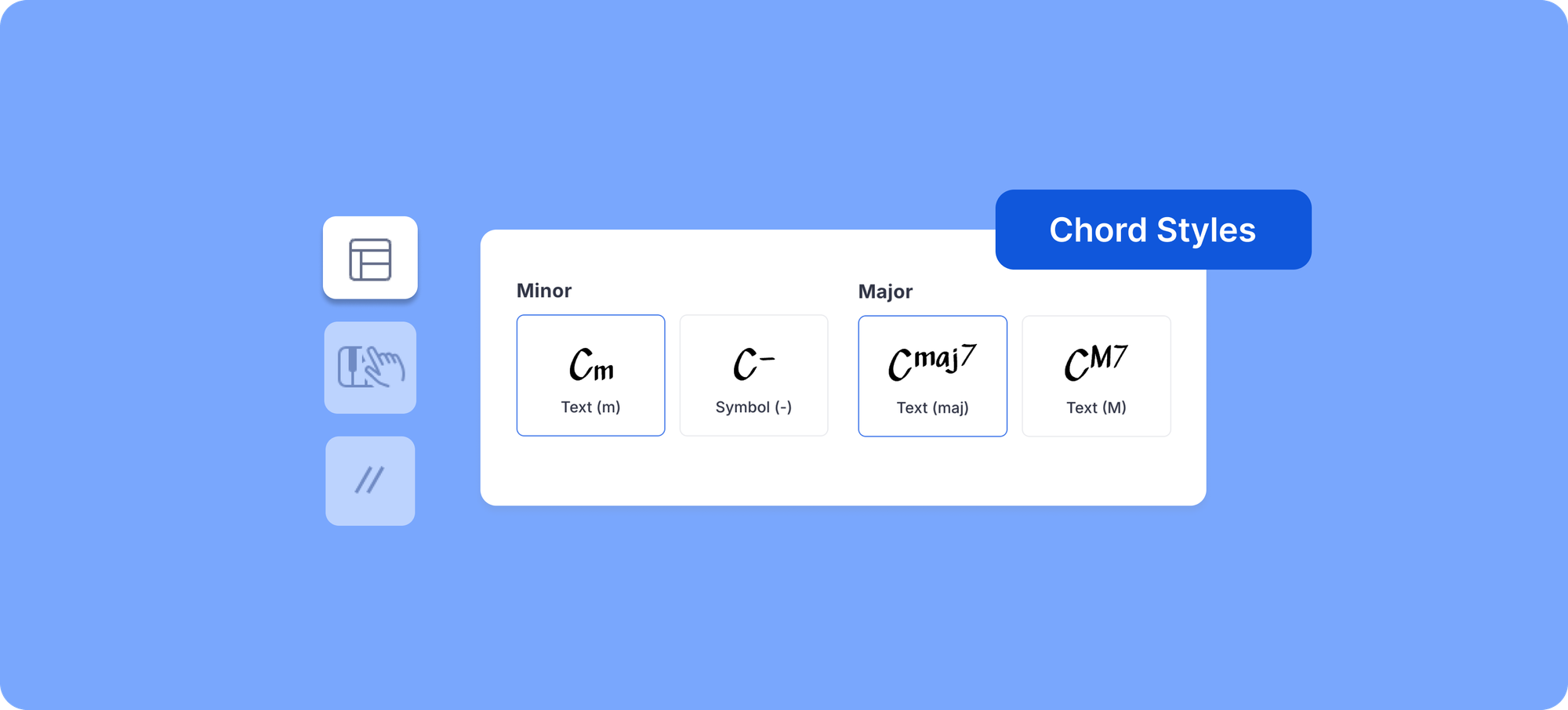
- You can choose the chord symbols you want to use in the layout settings > tutorial.
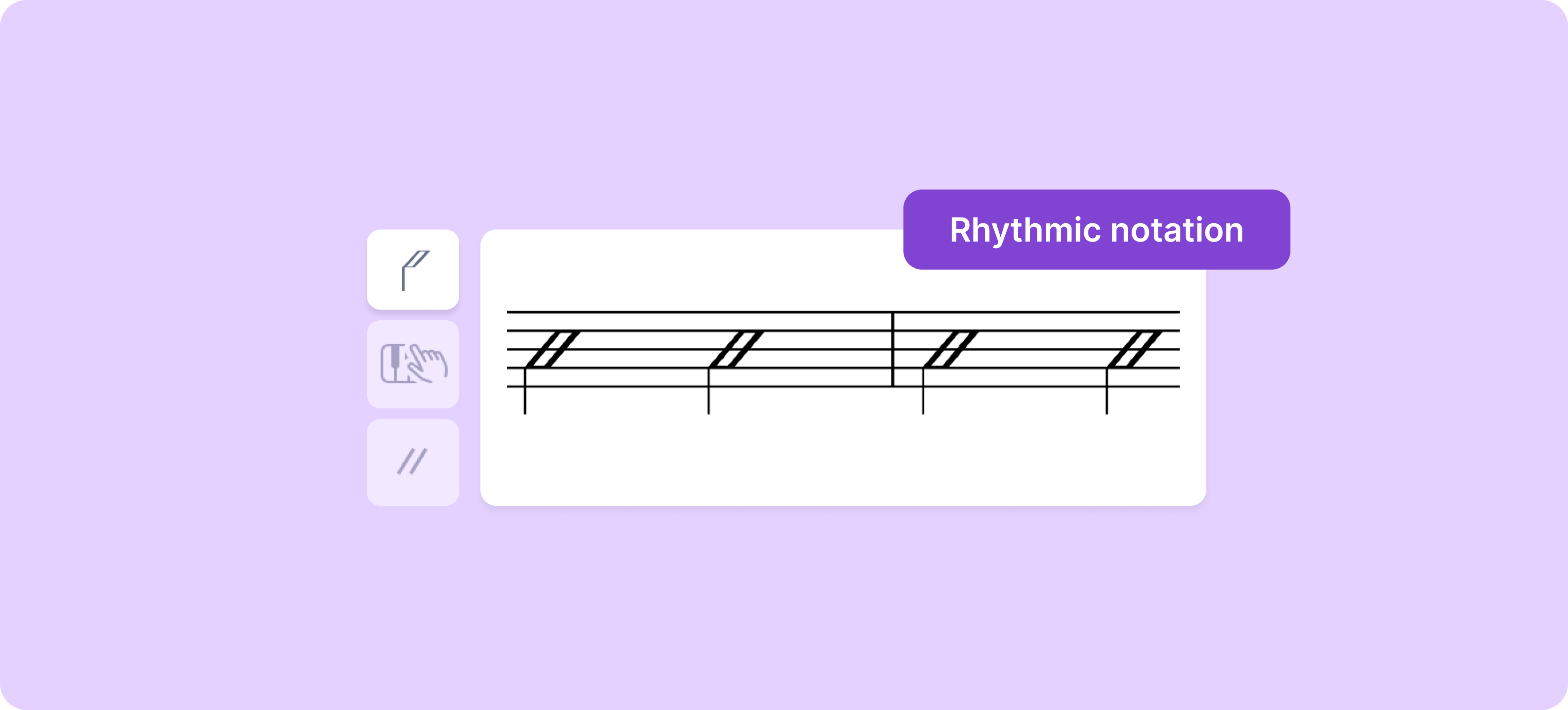
- If your lead sheet do not need the melody you can use the slash notation for a cleaner view for the musicians > tutorial.
The lyrics
If the song has lyrics, you can add them to your lead sheet using the lyrics tool in the text toolbar.
💡 Remember, you can add a verse using the down arrow on your keyboard. You can also toggle between verses using the arrow keys.
Tips to Create a Lead Sheet in Flat
Besides the key features mentioned above, I want to highlight a couple more that will help you create the best lead sheets for your band or ensemble.
- Adding extra information for your musicians
You may want to add notes for the musicians to consider during a song's rehearsals or concerts. For this purpose, you can use the annotations available in the text toolbar > tutorial.
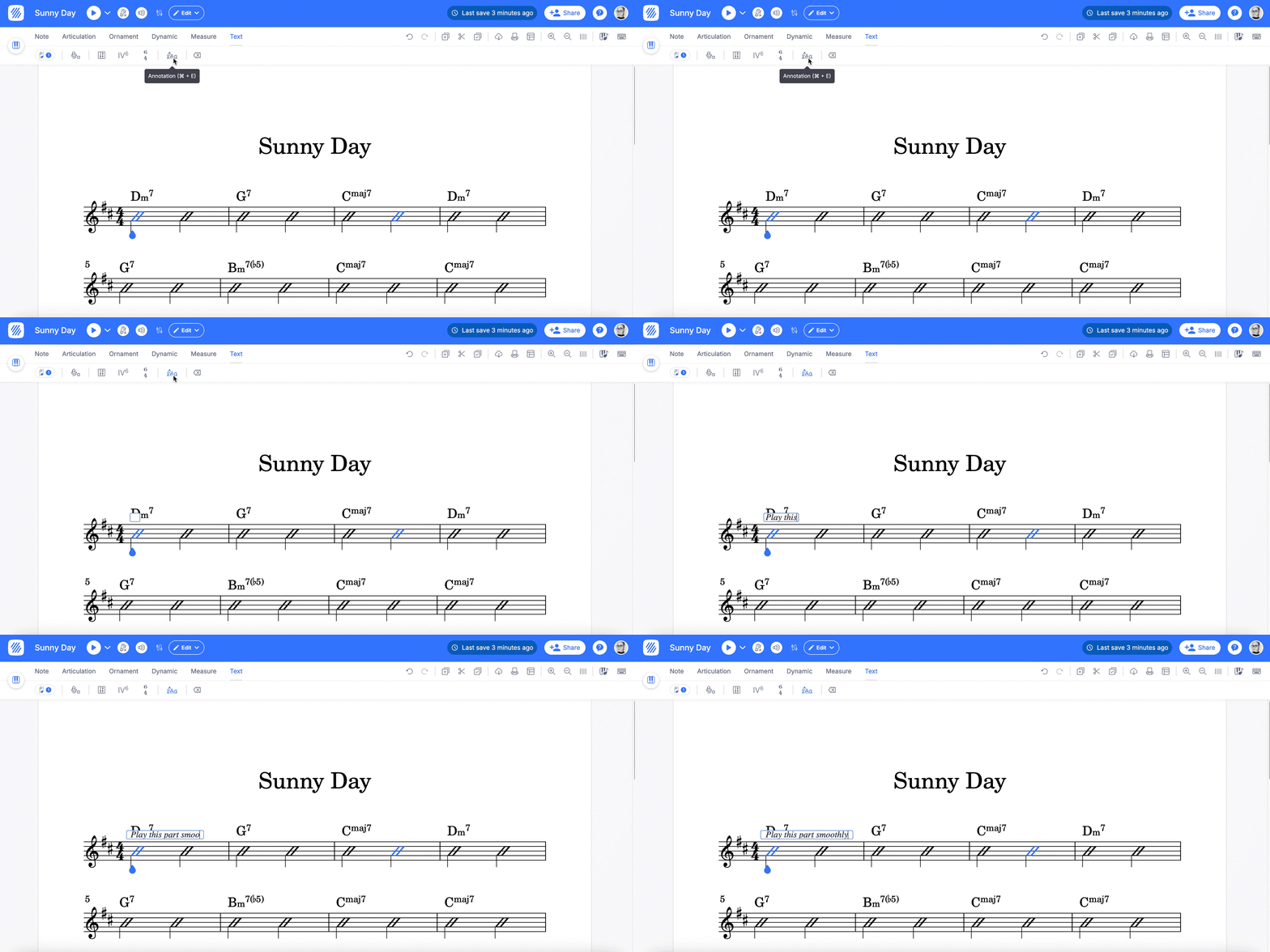
- Collaboration features
One of the best features of our music notation software is the ability to collaborate in real time. This makes it ideal for creating leadsheets, allowing you to add musicians to your score so that you can work on it together.
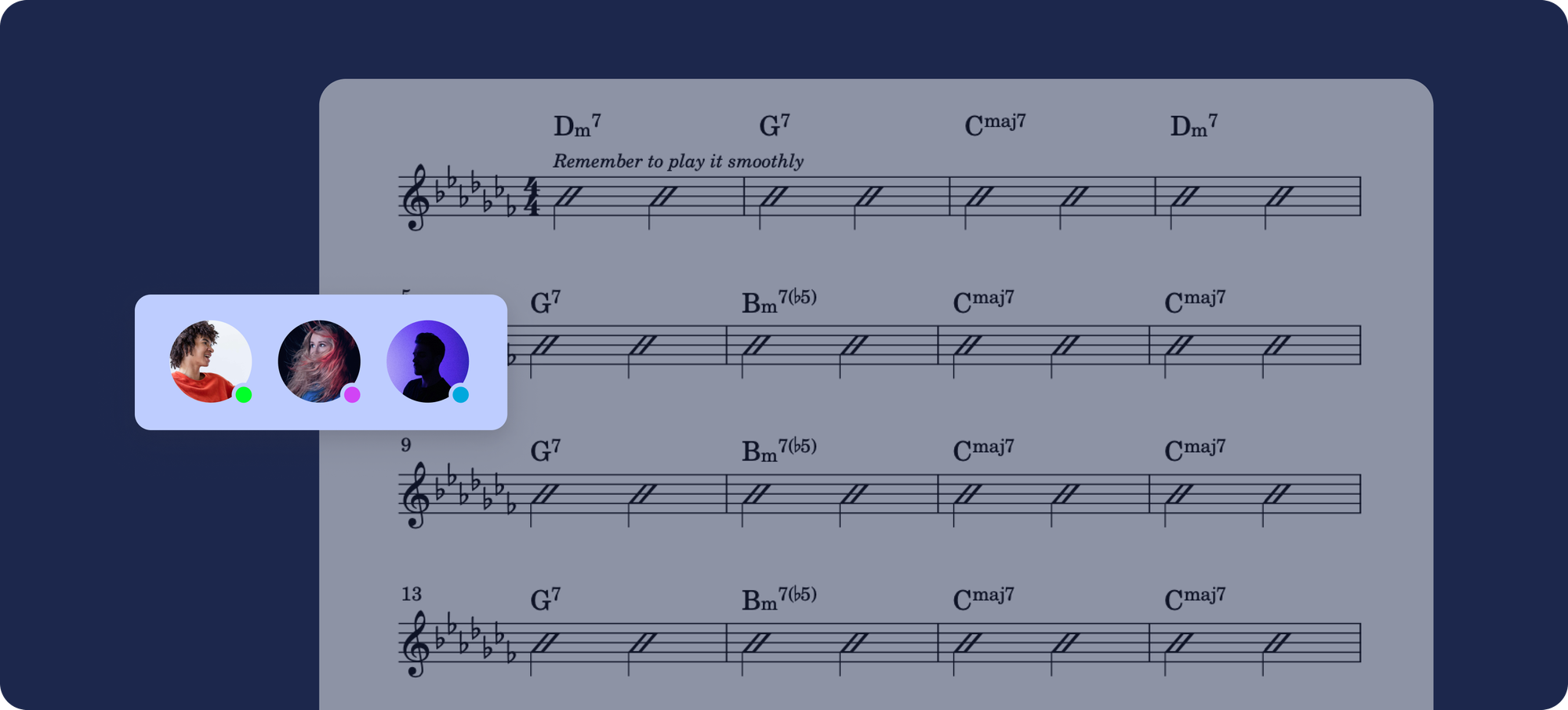
This is all for now regarding the music lead sheets; now let's check what's new with the community!
Flat Community News
July challenge
In this challenge, we inveted you to choose a migratory bird, and compose a song that makes listeners feel what it would be like to be that bird on its migration journey.
🔥 We'll announce the winner very soon, so stay tuned! Find out more here.
August challenge
August's challenge is live! For this challenge, we want you you to choose a song that has significantly impacted you as a composer. It should be a well-known song so that everyone in the community can recognize it. Select a short melody from that song (4 to 6 measures maximum) and use it as a motif to build your own composition.
 Rebeca Valverde
Flat Affiliate Program
At Flat, we’re all about building connections and celebrating our vibrant community. We’re thrilled to introduce our exciting new affiliate program for musicians and music teachers! 🎶
This unique opportunity allows you to share Flat with your audience while earning money. Whether you run a blog, host a YouTube channel, or teach music online, this program is designed with you in mind. You’ll have the chance to inspire others and expand your reach in the music world.
Ready to join us on this musical journey?
Rebeca Valverde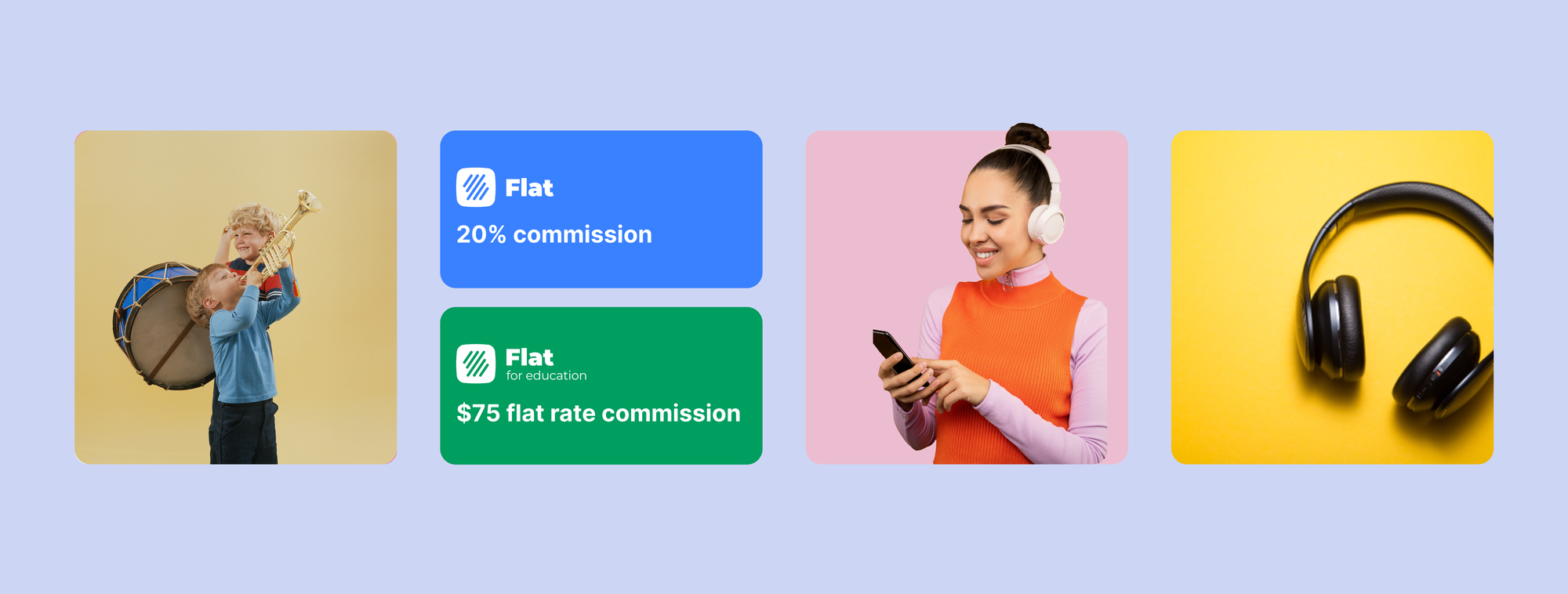
New articles
If you haven't read them yet:
✍🏽 Evoke the Right Emotions: A Guide to Modulation in Music
✍🏽 Create a Guitar Video Tutorial Using Flat's Music Notation Software
Follow us on social media
It would be fantastic if you'd follow us on Instagram and Twitter.
You'll get great content while also supporting our project 🤩
Feedback?
If you have any questions or suggestions for our product team, please reach out: hello@flat.io.
Have a wonderful day!