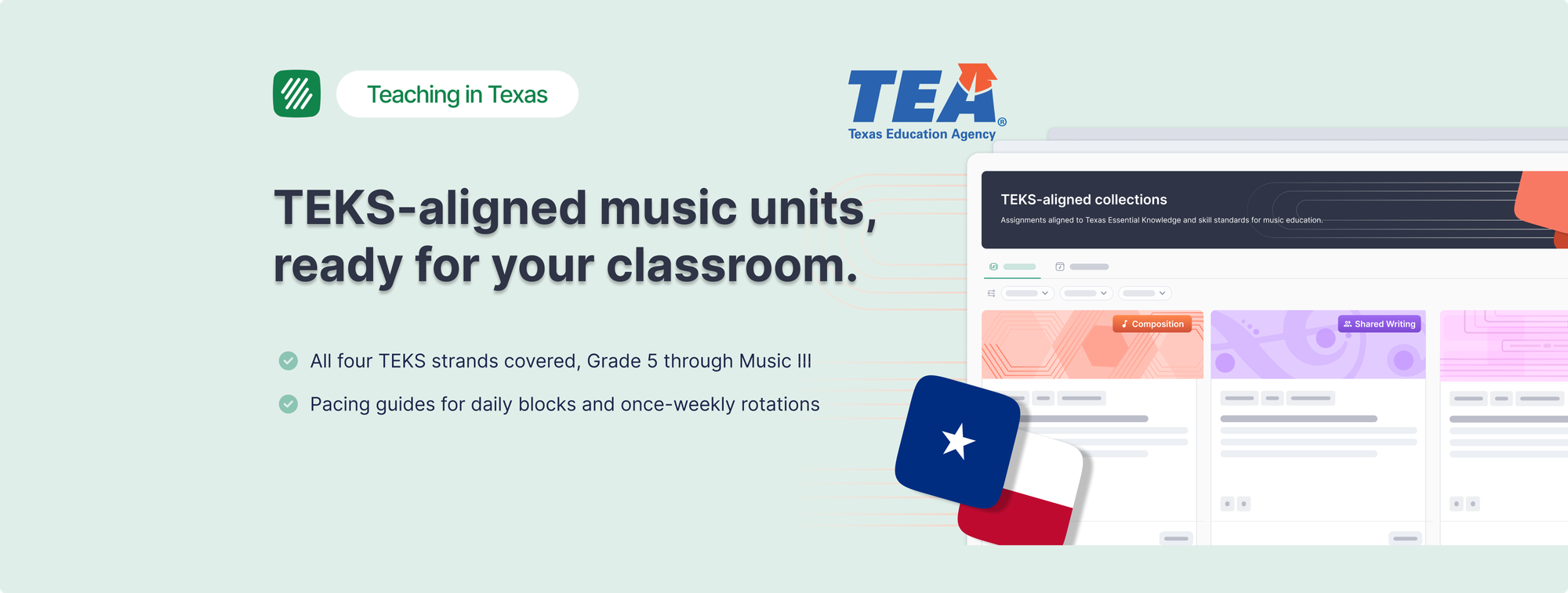
Pull up the Fine Arts TEKS for Grade 5 music and count the strands. There are four: Music Literacy, Creative Expression, Historical and Cultural Relevance, Critical Evaluation and Response. Now multiply that across 36 weeks, factor in your UIL (University Interscholastic League) commitments, your concert calendar, and the rotating cast of assemblies that appear on your schedule without warning. Oh, and the very real possibility that you see some of your students once a week on a cart.
Building a coherent, standards-aligned curriculum on top of all that is not a planning problem. It is an engineering problem. And most Texas music teachers are solving it in fragments -- a TPT (Teachers Pay Teachers) download here, a leftover unit from a previous teacher there, a week of improvisation when the original plan falls apart in October.
This guide is for teachers who are done patching.
What "TEKS-Aligned" Actually Means (It's More Than a Label)
Claiming TEKS alignment is easy. Doing it is something different.
The Texas Essential Knowledge and Skills are not a checklist to post on your wall. They are an architecture. Each strand builds vertically across grade levels -- what a fifth grader does with compound meter in spring should scaffold what they do with syncopation in Music I the following year. If your curriculum does not reflect that sequencing, students arrive at middle school with gaps that show up quickly, and they usually show up loudest in the skills you least expected.
True alignment has four qualities. The learning sequence is intentional. Concepts are introduced, practiced, and applied before new ones layer on top. Assessments match the depth of the standard: if a TEKS asks students to analyze how musical elements support expressive intent, a worksheet asking them to circle dynamics is not evidence of mastery. Vocabulary is embedded inside musical experiences, not isolated on a glossary page students see once. And all four strands are genuinely present – including the creative and analytical ones that are harder to build and much easier to skip.
That last point matters more than it sounds. Performance standards are relatively easy to document. It is the Creative Expression and Critical Evaluation and Response strands where most curricula fall short. TEA (Texas Education Agency), scrutiny is increasing as the state pushes harder on HQIM (high-quality instructional materials), a TEA designation for curriculum that is rigorous, standards-aligned, and supported by actual evidence of student learning – across fine arts programs. When your fine arts coordinator starts asking about HQIM compliance, those two strands are exactly what they are looking at.
The Grade 5 and Middle School Tightrope
Fifth grade is where music literacy either clicks or it does not.
Students in Grade 5 are expected to work with compound meter, rondo and ABAC forms, expressive markings as interpretive tools, and the beginnings of score analysis. That is a significant cognitive load for any class, and especially for one that only has you for 45 minutes every few days.
The TEKS progression for middle school assumes students arrive in sixth grade with that foundation intact. In Music I, they start making independent musical decisions, connecting expressive choices to cultural context, practicing structured self-evaluation. By Music III, the expectations include peer critique, leadership skills, and connecting harmonic choices to historical context. Those expectations do not come from nowhere. They come from five years of scaffolded instruction that either happened or it did not.
Most purchased music resources cover the accessible parts: rhythm exercises, note identification, listening worksheets. The harder parts such as composition within parameters, analytical writing about expressive choices, critical response to student work, are either absent or unsequenced in a way that actually builds toward a standard. That gap is the planning problem Texas music teachers keep running into, semester after semester.
What a Truly Aligned Unit Looks Like in Motion
Here is a concrete example from a Grade 5 unit built around rondo form.
A well-sequenced unit does not open with notation. It opens with listening. Students hear "Rondo alla Turca" by Mozart and move to it, physically distinguishing the returning A section from the contrasting B and C sections before they can name them. That is Music Literacy strand work. It is also how the brain processes new structural concepts: aural before visual, experience before label.
From there, students annotate a printed or digital score, labeling sections, circling tempo markings, and identifying articulation. Now they are reading and interpreting. The TEKS verb is analyze, and they are doing it.
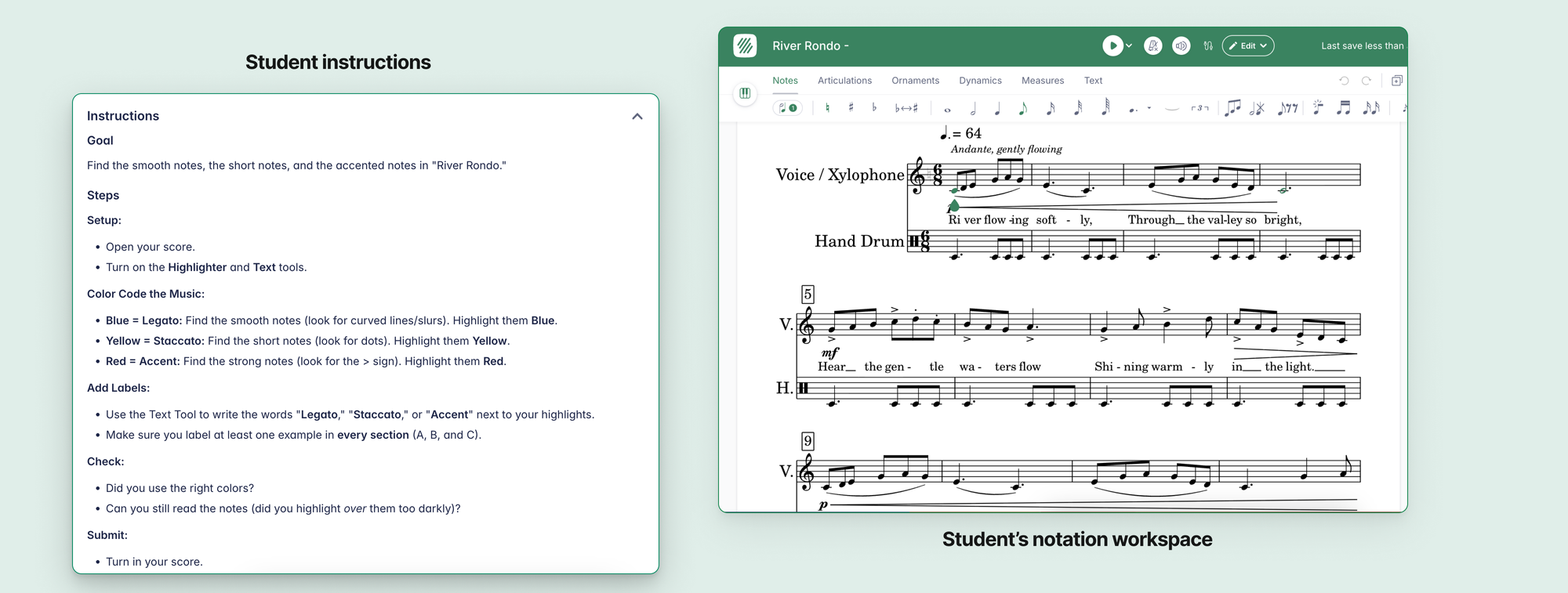
The composition task comes third: create a B section in the same meter and style as the provided A section. Not free composition – constrained composition, which is harder and more instructionally valuable. Students cannot hide behind randomness. They have to make choices and defend them.
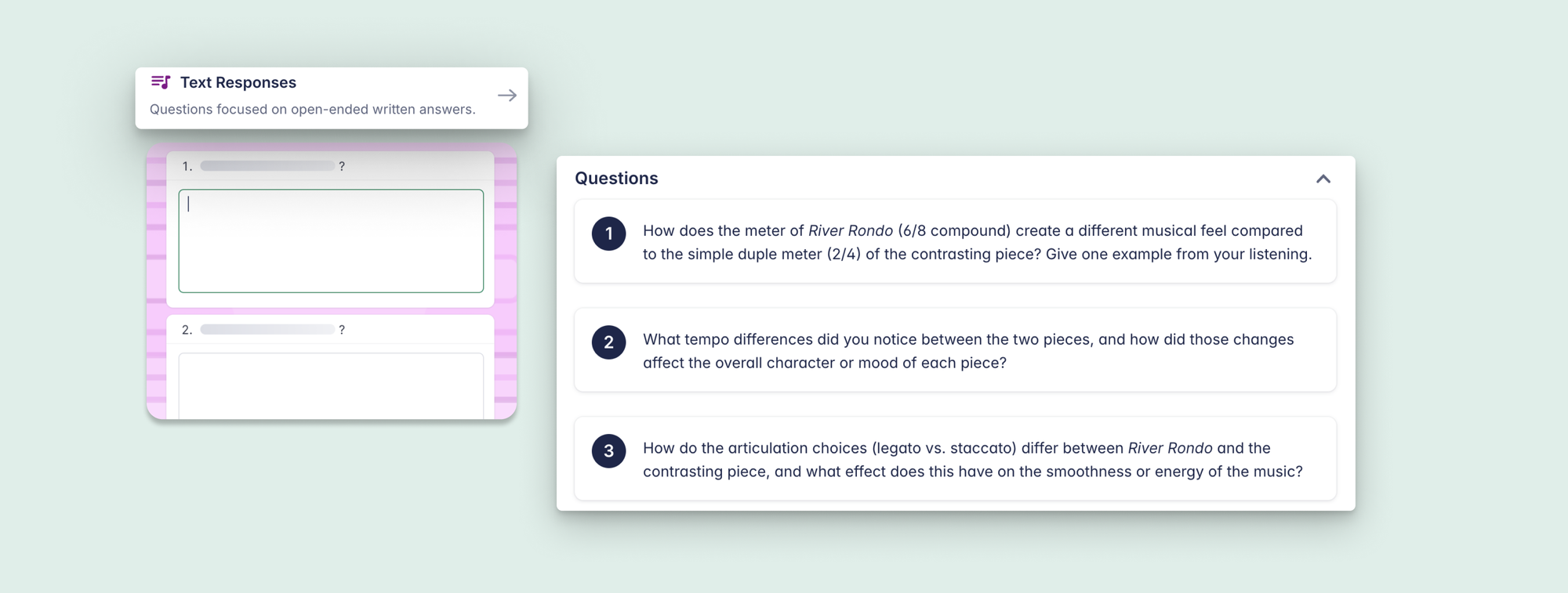
That defense is the fourth stage with the expressive writing. Why did you choose a piano dynamic for your B section? What effect does the contrast create? This is Critical Evaluation and Response, and it is often the strand that gets cut when time is short. Built into the arc of the unit, it is not optional.
The unit closes with a recorded performance and structured peer critique using the same rubric the teacher uses. Students listen back to their own playing. They improve. That growth is documented.
Notice the path:
hear → see → understand → create → articulate → perform → reflect.
Every step prepares the next. Every step touches a different strand. That is what TEKS alignment looks like in motion!
Try This Inside Flat for Education
Want to see what a TEKS-aligned composition task looks like before committing to a full unit? Start here.
Log in to Flat for Education and go to your Assignment Library. Open the TEKS folder and browse the Grade 5 or Music I assignments. Pick one that covers Creative Expression – a composition task works well for this. You can assign it to a class as-is, or open it and adapt it: change the meter, swap the melodic material, adjust the parameters to match what your students are working on right now. The structure and the TEKS mapping stay intact; you are just tailoring the content.
If you want to build your own from scratch, create a new assignment, choose a score template, and add this instruction line to the task: Explain in a comment why your B section sounds different from the A section.
One sentence. That is all. When students submit, you have a score and a written rationale in the same place. You can see immediately whether a student understood contrast as a compositional concept or just moved notes around. That comment – one sentence from a fifth grader – is more diagnostic than most worksheet responses. It is also direct evidence of TEKS strand 4 (Critical Evaluation and Response), which is exactly what a fine arts coordinator is looking for when they ask whether your program is genuinely standards-aligned.
Watch Flat for Education specialist Nate walk through the TEKS units built for Texas music educators.
How to Evaluate Any TEKS Resource Before You Use It
Texas teachers are not short on resources. They are short on resources that actually do what they claim. Before adopting any curriculum -- from a publisher, a platform, or a colleague's shared Google Drive -- run it through these questions.
Can you trace the learning sequence? A real scope and sequence shows you how Week 8 builds on Week 5. If the honest answer is "the order doesn't really matter," that is a problem.
Does it cover all four strands? Look specifically for Creative Expression tasks beyond performance, and anything that addresses the Critical Evaluation and Response strand. If those are thin or absent, the resource covers roughly half the TEKS.
Is vocabulary used in context? Students should encounter legato, compound meter, and syncopation inside musical experiences – not just defined on a list they see once and never again.
Does the assessment match what the standard asks? If the TEKS uses the verb evaluate, the assessment should require evaluation, not identification. This distinction is where a lot of purchased curriculum quietly fails.
Does it fit your actual schedule? A daily 50-minute block and a once-weekly 40-minute rotational model are genuinely different programs. Any resource serious about usability builds pacing guidance for both. If it does not, you will be adapting it from scratch anyway.
The Documentation Question Most Fine Arts Teachers Overlook
There is a practical dimension to TEKS alignment that does not get enough attention: when your fine arts coordinator, your principal, or your district's curriculum director asks for evidence that your instruction is standards-aligned, what can you show them?
Written lesson plans are one layer. Student work is another – and it is more convincing.
Digital platforms like Flat for Education create a record automatically. When a student annotates articulation markings on a score, composes a section with a written rationale, and records a performance that applies those markings, those are concrete artifacts. They exist as timestamped, organized evidence that specific TEKS strands were taught, practiced, and assessed – not just covered.
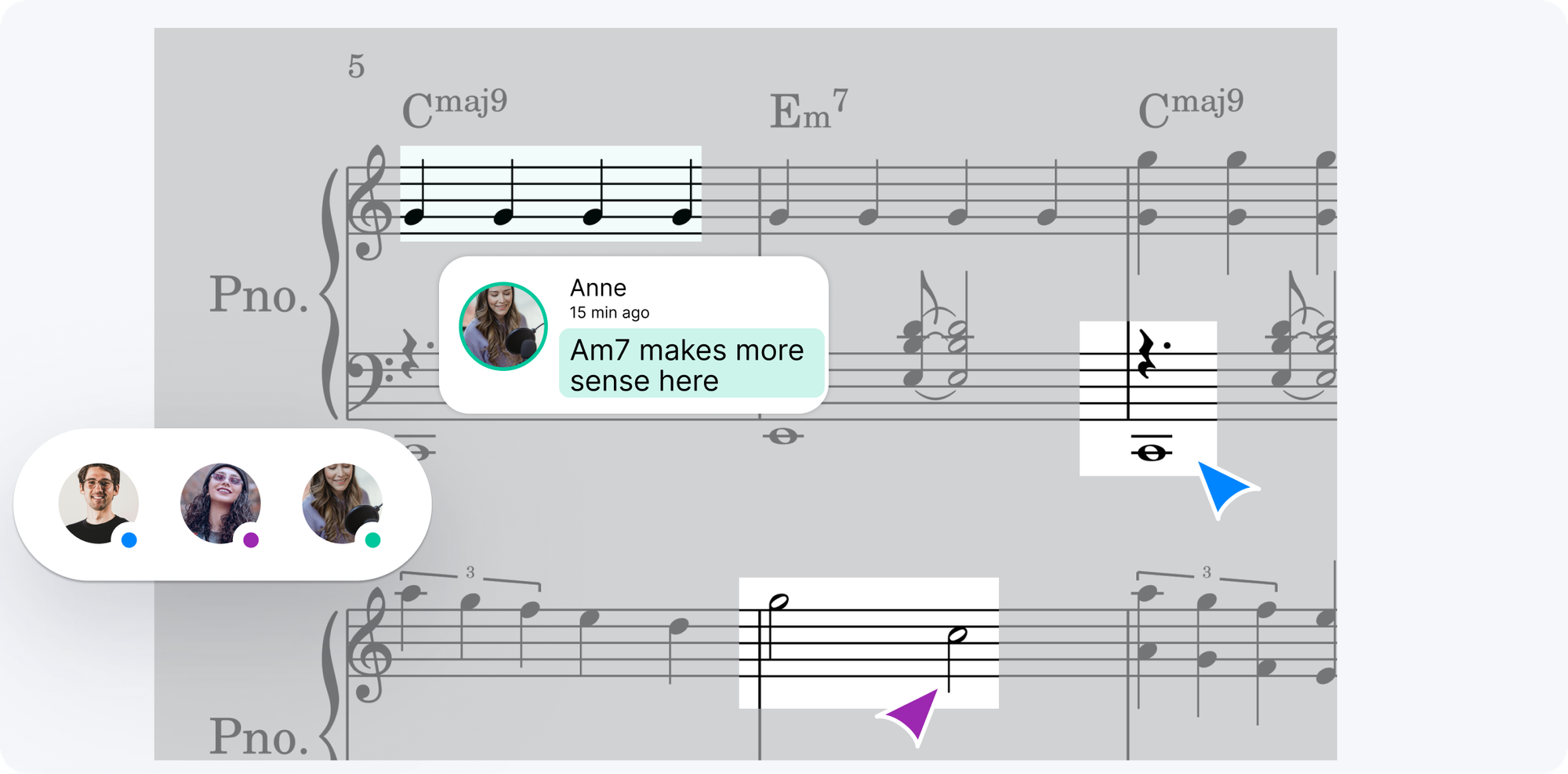
For fine arts programs under scrutiny in an HQIM conversation, that kind of documentation matters. It is the difference between a teacher saying "yes, I taught the Creative Expression strand" and being able to show exactly what that looked like for each student, for each assignment, in a searchable dashboard.
What the Flat for Education Units Cover
Flat for Education has built TEKS-aligned scope and sequences for Grade 5 and Middle School Music (Grades 6, 7, and 8). Each is fully mapped to Texas standards, with pacing guidance for multiple scheduling models, built-in vocabulary support, student-facing rubrics, and a complete 36-week arc.
The units are designed to be taught inside Flat for Education's digital platform. Students annotate scores, compose within structured parameters, record performances, and submit work – all in one place. Teachers can track progress by student, by standard, and by strand. Instructional leaders can see program-wide data.
If you want to see the full scope and sequence before committing, you can contact us to get the TEKS pacing guide for your grade level at edu@flat.io
Or start with a free trial and explore the Grade 5 or Middle School units directly.

Frequently Asked Questions
What are the four strands of the music TEKS in Texas? The Texas music TEKS are organized into four strands: Foundations: Music Literacy (reading, writing, and reproducing music), Creative Expression (performing, composing, and improvising), Historical and Cultural Relevance (connecting music to cultural and historical context), and Critical Evaluation and Response (analyzing and evaluating music using musical vocabulary). All four strands appear at every grade level, with expectations becoming more complex from kindergarten through Music IV.
How do I align my music curriculum to Texas TEKS? It requires more than listing standard numbers on a lesson plan. The learning sequence needs to be intentional across a school year, assessments need to match the cognitive demand the standard actually calls for, all four strands need to be addressed, and vocabulary needs to be embedded in musical experience rather than isolated in worksheets. A 36-week scope and sequence mapped to TEKS strands, with pacing guides for your specific scheduling model, is the most reliable starting point.
What do the music TEKS expect from Grade 5 students? Fifth grade music TEKS require students to work with compound meter and syncopation, identify and analyze musical forms including rondo and ABAC, interpret expressive markings as performance tools, annotate and respond to scores in writing, and make compositional choices within structured parameters. By the end of Grade 5, students should be able to connect musical choices to expressive intent using appropriate vocabulary.
What is HQIM in Texas fine arts education? HQIM stands for high-quality instructional materials -- a Texas Education Agency designation for curriculum that is rigorous, standards-aligned, and supported by evidence of student learning. While formal HQIM review processes have focused primarily on core academic subjects, fine arts programs are under increasing pressure to demonstrate the same qualities: coherent sequencing, alignment across all strands, and student work that shows mastery rather than just completion.
What scheduling models does the Flat for Education TEKS unit support? The units include pacing guidance for both daily class models and once-weekly rotational schedules, which reflects the reality that Texas music programs run on very different structures. A 50-minute daily block and a 40-minute cart rotation are not the same program, and the pacing guides account for that difference.
How is middle school music TEKS different from elementary? In middle school, Texas music TEKS (Music I through Music III) build toward greater independence. Students make increasingly self-directed performance and compositional decisions, analyze music with growing specificity, engage in structured peer critique, and connect musical choices to cultural and historical context. By Music III (Grade 8), leadership, independent practice, and nuanced critical response are explicitly required -- all of which depend on the literacy and creative foundation built in elementary school.
Does Flat for Education have TEKS-aligned music units for Texas? Yes. Flat for Education has built TEKS-aligned scope and sequences for Grade 5 and Middle School Music (Music I, II, and III). Each includes a full 36-week arc mapped to Texas standards, pacing guides for multiple scheduling models, student-facing rubrics, vocabulary support, and assignments covering all four TEKS strands. Because units are taught inside Flat for Education's digital platform, student work – compositions, score annotations, performance recordings – becomes documented evidence of TEKS mastery.