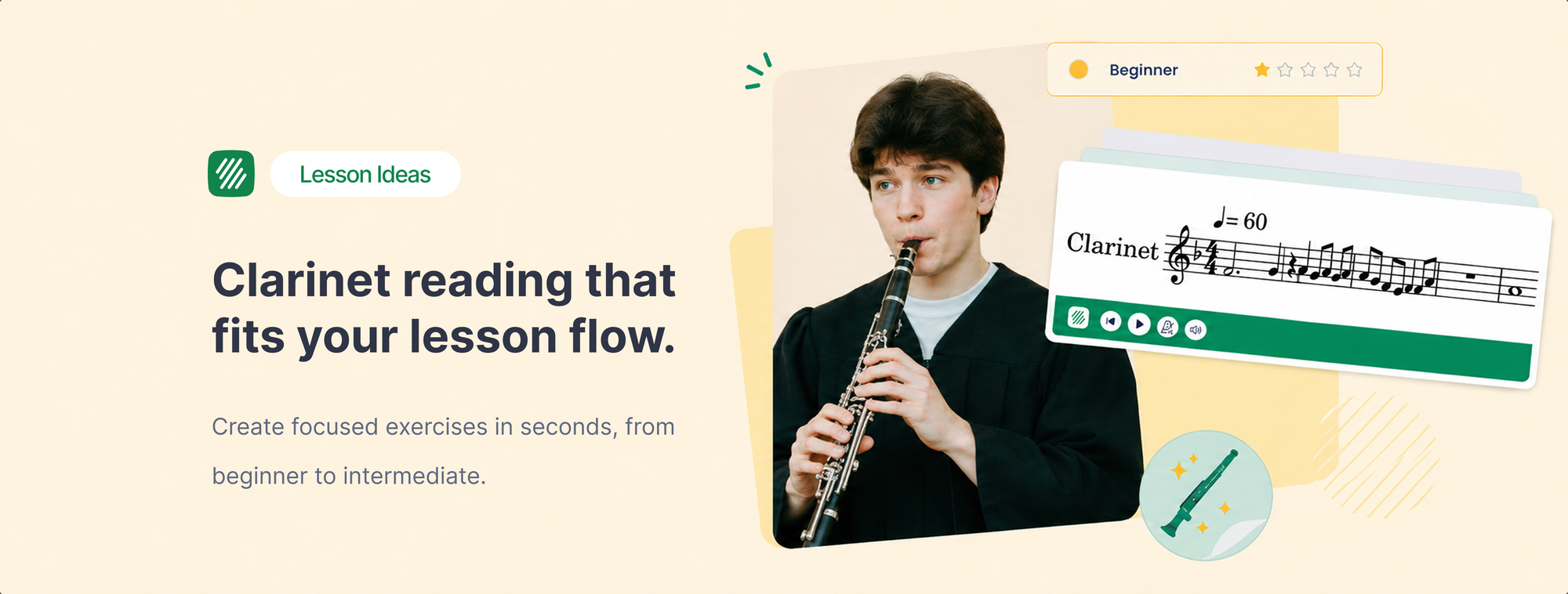
Every clarinet teacher knows the moment. A student is reading along confidently, low register, solid rhythm, making real progress. Then the exercise crosses B-flat to B-natural. The break. And the reading stops entirely, because the physical challenge of crossing from the lower to the upper register overwhelms everything else.
The clarinet's register break is the defining sight reading challenge on the instrument. Notes below B-flat and notes above B-natural use completely different fingerings and produce sound through different harmonic resonances. For students who haven't yet automated the break crossing, encountering it unexpectedly in a sight reading exercise is like hitting a wall.
The good news: this is trainable. And the Flat for Education sight reading generator, which creates unique 8-measure exercises instantly, gives you the material to build it systematically.

What the break means for sight-reading practice
Before using any sight-reading material with clarinet students, it's worth being explicit about difficulty levels in terms of the break. Lower difficulty settings will keep most of the exercise in the lower register, which is appropriate for students who haven't yet crossed the break reliably. Higher settings will introduce upper register material and break crossings.
Don't assume that a student who can play a crossing in a piece they've rehearsed can also read it cold. Rehearsed crossings are different from sight read crossings. The motor memory that makes a rehearsed crossing automatic isn't available in a first read. Build sight reading in the upper register separately and deliberately.
One register at a time
Generate an exercise at a lower difficulty level and ask students to read the entire thing in the chalumeau register only, transposing any upper register notes down an octave if they appear. The goal is uninterrupted reading flow, not register accuracy. Students who can read a complete 8-measure exercise without stopping in the lower register have built something useful.
Then generate a new exercise at a difficulty level that introduces some upper register material. Ask them to read only the upper register notes, playing anything below the break as a sustained tone while they track the rhythm. Again, uninterrupted flow.
The two-register exercise comes last. By the time students read across the break in a combined exercise, they've already navigated each register separately in today's session. The crossing is less of a surprise.
The squeak fear and how sight reading addresses it
Clarinet students, particularly in their first two years, are afraid of squeaking. This fear does real damage to sight-reading development because it creates a "slow down and be careful" reflex that is the opposite of what good sight-reading requires. Fluent reading demands keeping a tempo and moving forward. Fear of squeaking produces exactly the hesitation that kills momentum.
A useful reframe: tell students that for this exercise, squeaks count as notes. Keep going. This sounds like a joke but it isn't. Removing the consequence of a squeak removes the fear response. Students who practice reading through squeaks rather than stopping when one happens develop reading fluency faster, because they learn that the exercise survives an imperfect note.
Use the chalumeau register for expressive sight reading
The clarinet's lower register, from low E to B-flat, has a dark, reedy quality that most beginning and intermediate students underuse. Generate a lower-difficulty exercise and explicitly ask students to focus on tone quality in this register: supported air, relaxed jaw, steady embouchure.
The combination of an easy sight-reading challenge (familiar register, manageable rhythm) with a tone quality focus produces a double benefit. Students aren't using all their attention on reading, which means they can direct some toward sound. The exercise becomes a musical experience rather than a reading test, which makes sight reading feel less threatening.
Clarinet section competitive reading
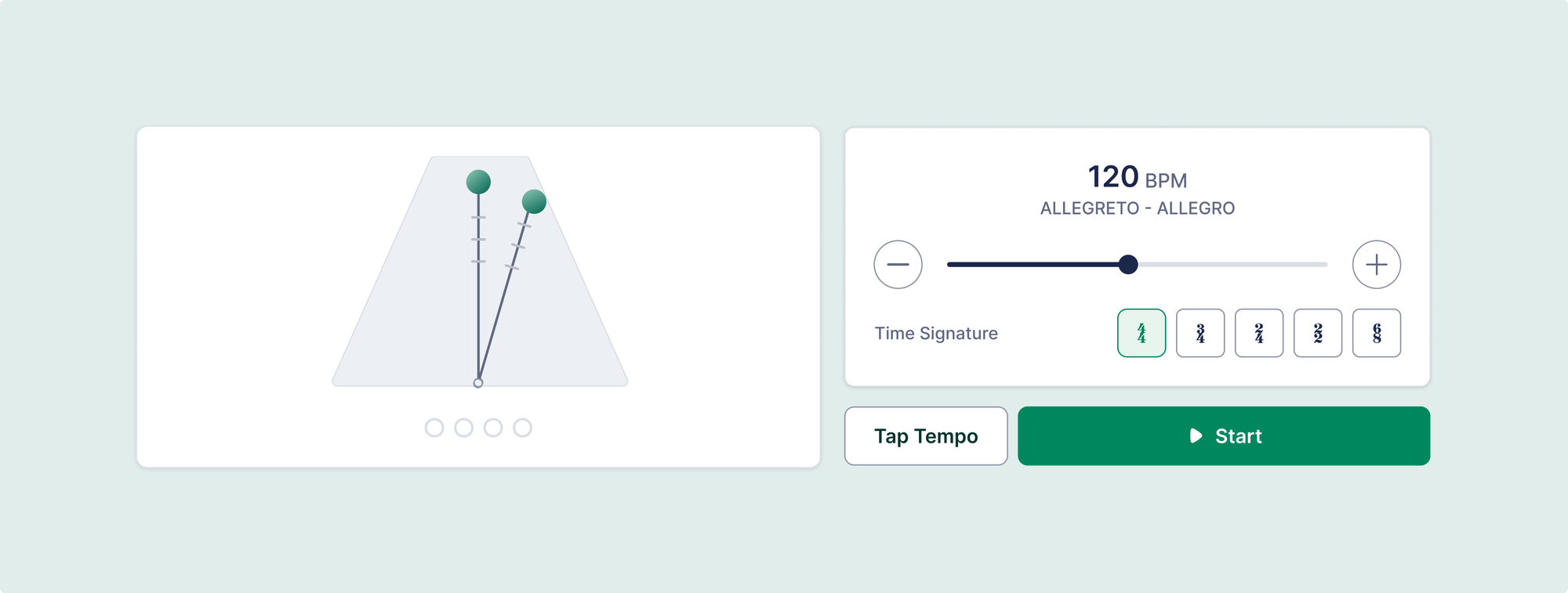
Generate the same exercise for every student in a clarinet section. Everyone reads simultaneously, at a tempo set by a shared metronome. The rule: if you stop, you're out. Last one playing wins.
This is deliberately a bit silly. But it solves a real problem. Students who stop and go back when reading alone often push through when stopping has a visible social consequence. The "keep going" habit is the most important habit in sight reading, and this activity builds it through competition rather than instruction.
Vary the difficulty depending on the section's current level. The exercise should be hard enough that most students struggle at some point, not so hard that everyone stops in bar 2.
Assign and record across Google Classroom and your LMS
Generate an exercise, assign it as a performance assignment through Flat for Education, and distribute via Google Classroom, Microsoft Teams, Canvas, Schoology, or MusicFirst. Students record their first read at home and submit. You hear the recording alongside the score and can mark specific bars where the break crossing caused problems.
Collect these recordings over a term. The before-and-after of a student's break crossing in September versus January is one of the clearest evidence artifacts you can show a parent, a department head, or a student who doesn't believe they've improved.

Flat for Education's sight reading generator creates fresh clarinet exercises at any difficulty level, in seconds. Assign them as class warm-ups, section readings, or recorded home practice submissions. Try it free for 30 days at flat.io/edu.
FAQ
Why is the register break so difficult for clarinet sight-reading?
The clarinet overblows at the twelfth rather than the octave, so crossing from the lower register to the upper register requires pressing the register key and making a significant fingering change at the same time. In rehearsed music this crossing becomes automatic through repetition, but in sight reading students meet it without preparation and have to execute it in real time without stopping, which is hard until the crossing has been practiced enough to become automatic.
What difficulty level should I use for beginner clarinet students?
For students who have not yet crossed the break reliably, use the lowest difficulty settings and check that generated exercises stay in the chalumeau register. Once students can cross the break consistently in rehearsed music, introduce higher difficulty levels that bring upper-register material into the sight-reading context. Building fluency in the lower register first produces better long-term readers.
How can sight-reading help with clarinet tone quality?
Exercises at a comfortable difficulty level give students cognitive space to focus on sound rather than notes. Using easy sight-reading material specifically to work on tone production, air support, or embouchure consistency builds both skills at once, and the unfamiliarity of a fresh exercise keeps students engaged even when the technical demand is lower.