
Hello everyone,
We're excited to keep you updated on the latest enhancements on Flat. Today we have some amazing news! We have added four marching band instruments to our list of HQ instruments, as many of you requested:
🎶 Marching Snare Drums
🎶 Marching Tenor Drums
🎶 Marching Bass Drums
🎶 Marching Cymbals
Additionally, the regular version of these marching band instruments is now available to all users in the free version.
Tips to Write Music for a Marching Band
Composing for a marching band requires a unique blend of musicality, creativity, and an understanding of the band's specific needs and capabilities. Whether you are aiming to write for a local high school band, a college marching band, or a competitive drum corps, here are some essential tips to help you write engaging marching band music.
🥁 Focus on Percussion
Percussion is they key element in any marching band. It provides the rhythmic foundation and drives the energy of the performance. Here are some tips for writing powerful percussion parts:
- Know Your Instruments: Familiarize yourself with the different percussion instruments used in marching bands (snare drums, bass drums, cymbals, and mallet percussion).
- Adapt to the context: For technical shows, write intricate and challenging percussion parts that showcase the players' skills. For crowd-pleaser shows, keep the rhythms simple and impactful.
- Know your limitations and ask for feedback: If you are not a percussion expert, reach out to a musician friend who is. Seek out people who can provide valuable feedback to ensure your parts are both playable and coherent with the style you are composing for.
🎼 Orchestrate Wisely
When orchestrating for a marching band, consider the following:
- Double Parts: Marching musicians often perform choreography while playing. Doubling parts can ensure the music remains strong even if some players need to catch their breath.
- Instrument Roles: Assign roles to instruments based on their strengths:
- Melody: Piccolo, flute, clarinet, trumpet, mallet percussion.
- Harmony: Alto and tenor saxophone, French horn (or mellophone), trombone.
- Bass: Baritone saxophone, baritone, tuba.
- Percussion: Crash cymbal, snare drum, bass drum.
✅ Keep it Simple
While marching band performances can be complex, simplicity in your compositions is vital:
- Memorization and Sight-Reading: Many marching bands memorize their music. Write parts that are easy to memorize and sight-read.
- Avoid Technical Overload: For non-technical shows, avoid overly complex rhythms and structures.
- Stick to Band-Friendly Keys: Transpose source material to keys that are comfortable for band instruments, avoiding unnecessary technical difficulties.
- Driving Rhythms: Use rhythmic drive to maintain energy throughout the performance. Avoid long, sustained notes that can reduce the overall momentum.
- Think About the Choreography: Consider how the music will pair with visual elements, the band's movements and formations.
Useful Flat Hacks for Composing for a Marching Band
Use HQ instruments and Playback
When writing your scores, we recommend using HQ instruments for better sound quality. This is especially important for composers writing for marching bands, as it allows you to hear the full richness and depth of each instrument, ensuring your arrangements are as accurate and impactful as possible.
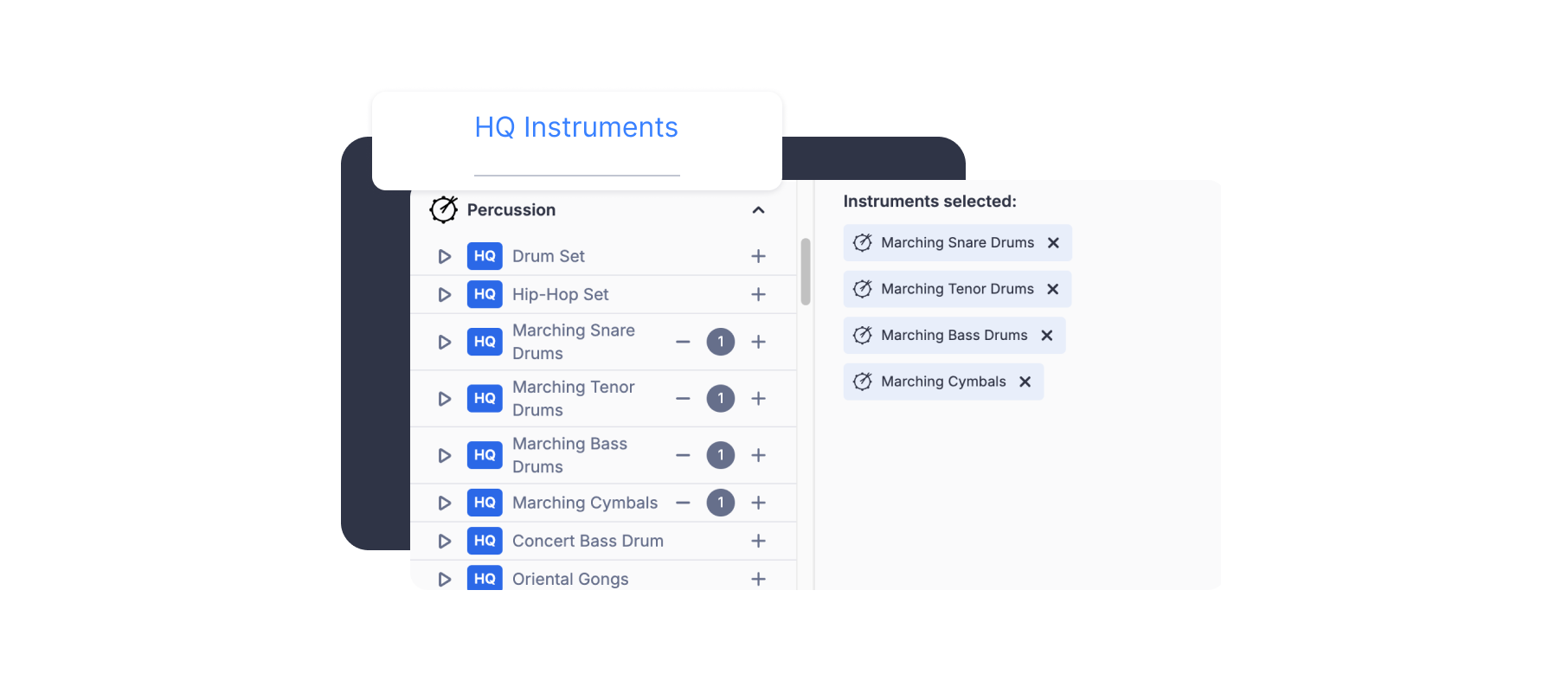
Additionally, make use of playback to listen to how your composition is sounding in real-time. This feature helps you assess the balance and harmony of your piece, ensuring that you are making the right decisions throughout the composition process.
💡 Learn all about the playback features in our dedicated guide below.

Annotations and Rehearsal Marks
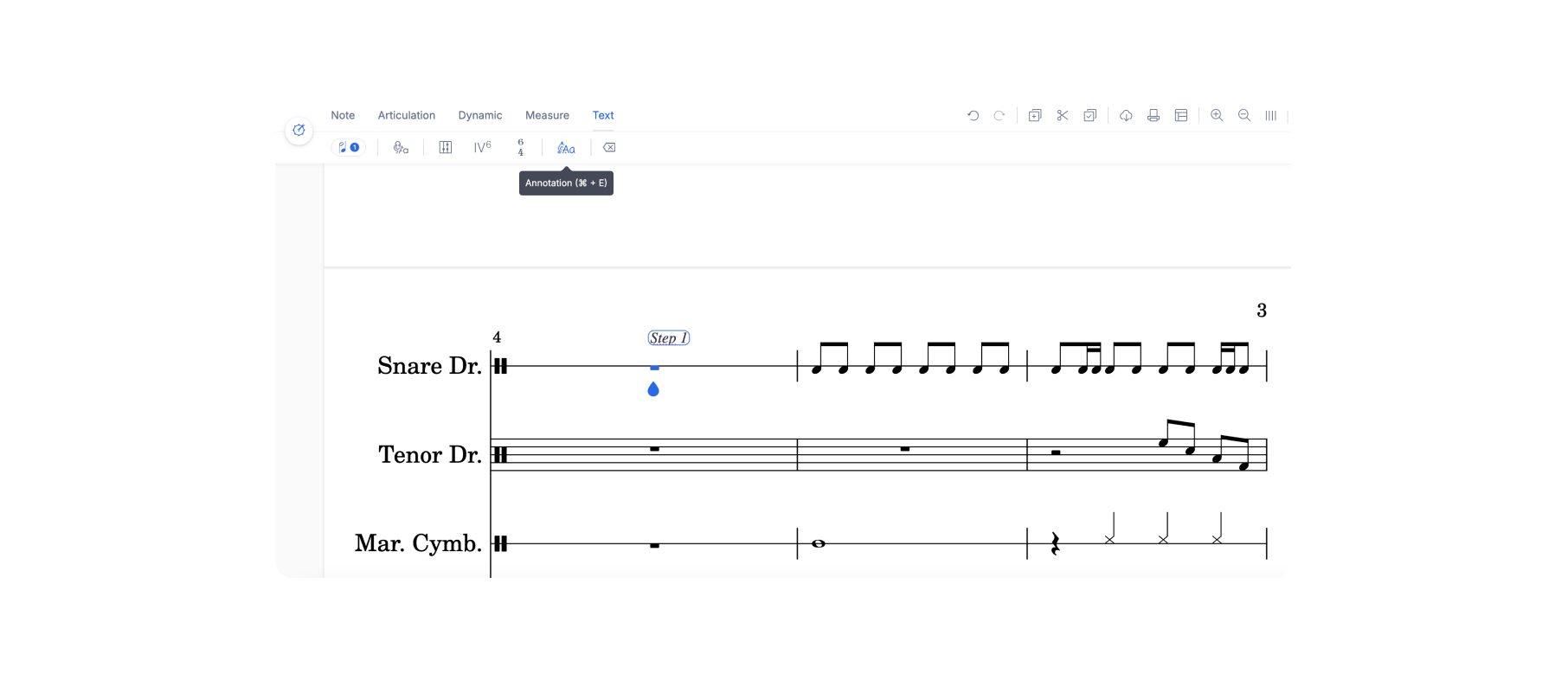
To help performers better navigate the score and to add important information they need to consider, we recommend using annotations and rehearsal marks. When composing for marching bands, annotations provide clear instructions and guidance on specific sections of the music, ensuring that performers understand your intentions.
Rehearsal marks make it easier for large groups to coordinate and practice efficiently, allowing for smoother rehearsals and more cohesive performances.
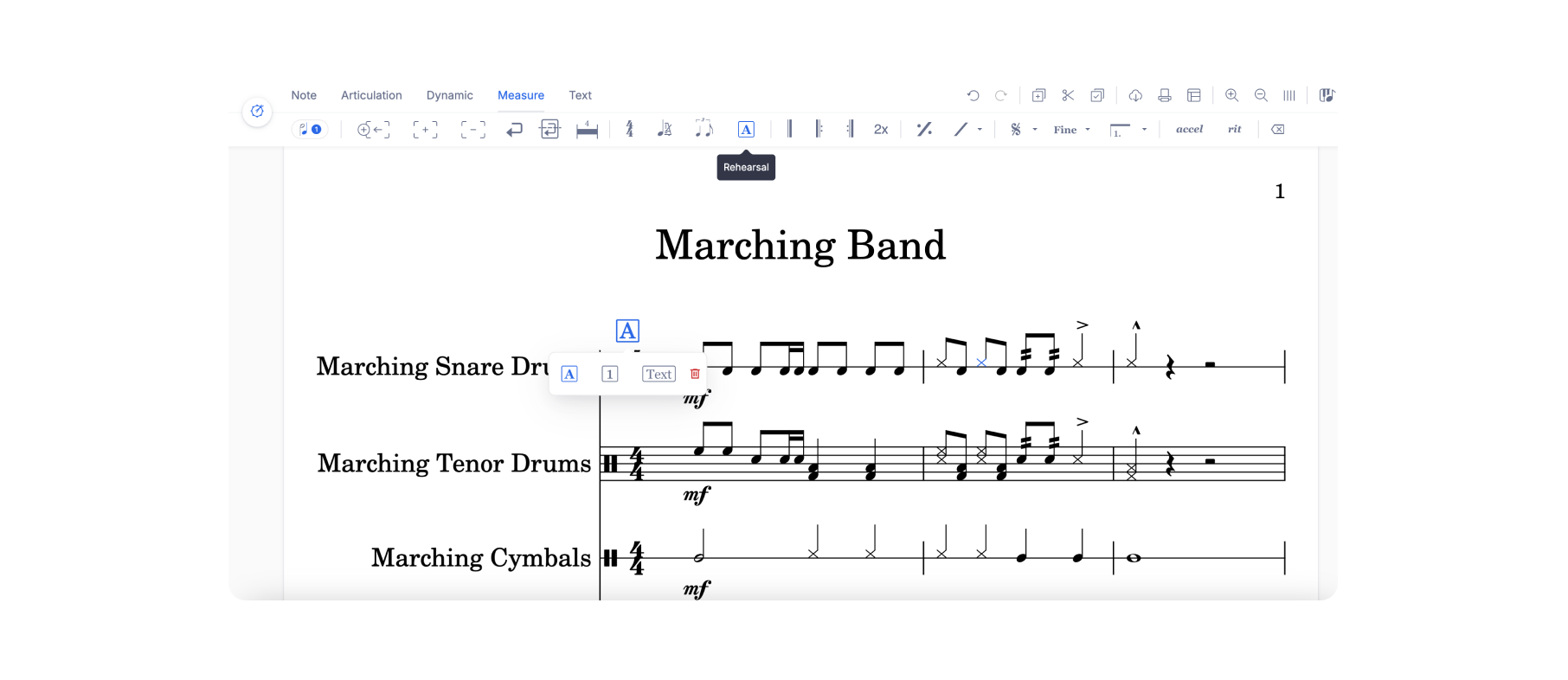
💡By using these tools, you can ensure that your compositions are well-interpreted and executed by the marching band, leading to a more polished and synchronised final performance.
Include breathing marks for brass and wind instruments
Include breathing marks for brass and wind instruments to ensure that performers can manage their breath efficiently throughout the performance. This is particularly important for marching band compositions, which often involve extended periods of playing and physical movement.
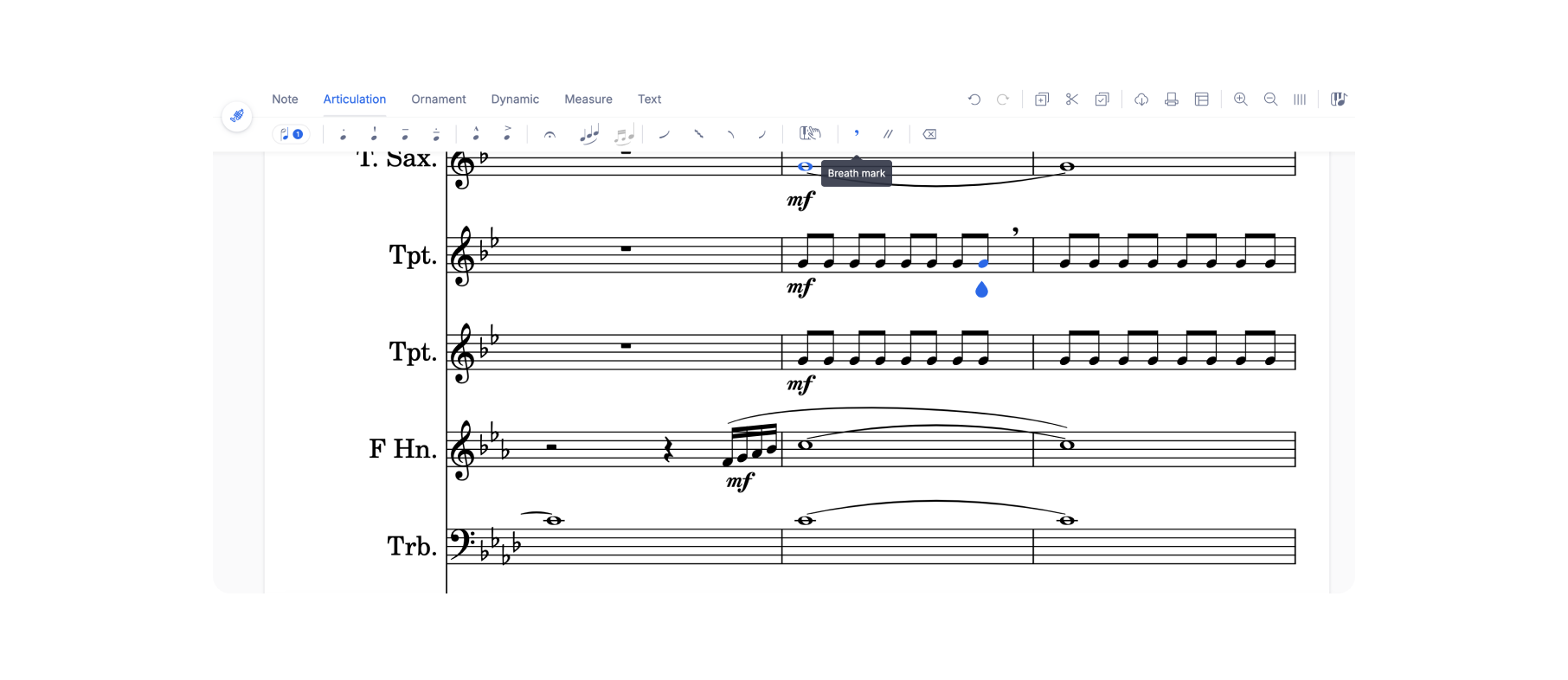
💡 Properly placed breathing marks help musicians maintain their stamina, avoid fatigue, and deliver a consistent and powerful sound.
Export the entire score and individual parts
Once you are done with the composition, it is time to share the parts with the marching band. In Flat, you can easily export the full score or individual parts, making the process very convenient.
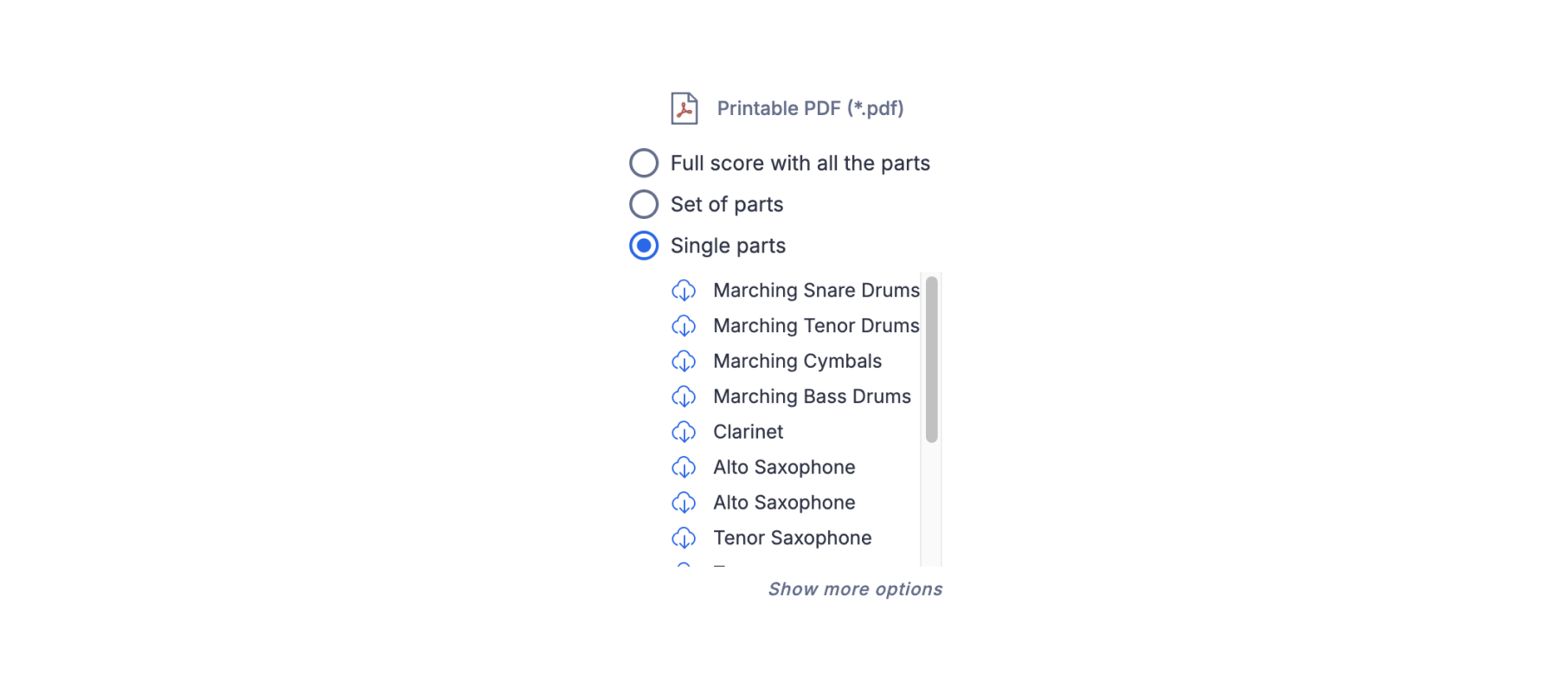
💡 This feature allows you to send each musician their corresponding part in just a few clicks.
Real-time collaboration
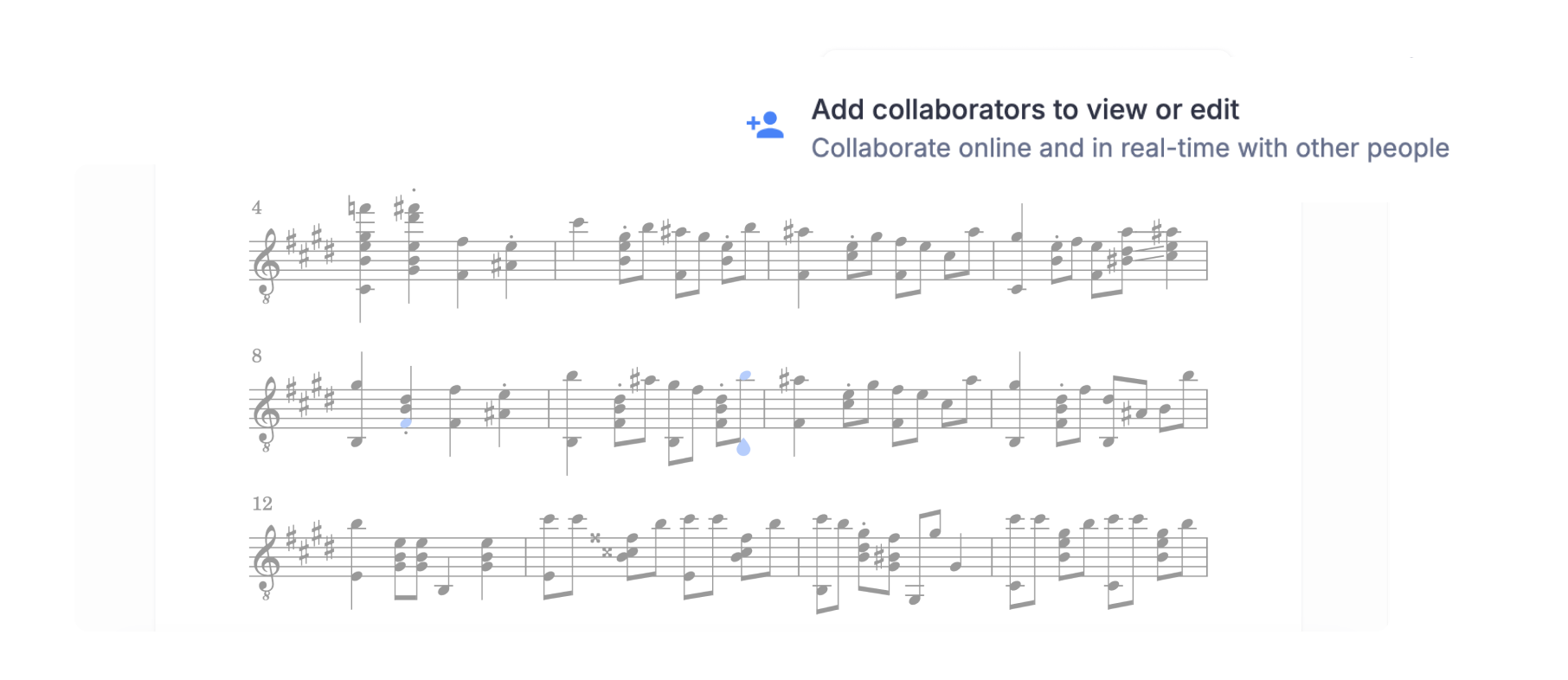
The icing on the cake is that you can add collaborators to your score to help you work on it or review it in real-time. This feature is invaluable for marching band compositions, as it allows for seamless collaboration and instant feedback from other composers, arrangers, or band directors.
Now it is time for you to put all of this into practice and create a marching band score ✨
Flat Community News
May challenge
For this challenge, we invited you craft a score that makes listeners feel like they're trying to escape a maze.
🔥 We'll announce the winner very soon, so stay tuned! Find out more here.
New articles
If you haven't read them yet:
✍🏽 Evoke the Right Emotions: A Guide to Modulation in Music
✍🏽 Create a Guitar Video Tutorial Using Flat's Music Notation Software
Follow us on social media
It would be fantastic if you'd follow us on Instagram and Twitter.
You'll get great content while also supporting our project 🤩
Feedback?
If you have any questions or suggestions for our product team, please reach out: hello@flat.io.
Have a wonderful day!