There's a reliable pattern in choral rehearsals where sight singing has not been developed systematically. The director plays a recording of the piece. Students listen. Students imitate. The learning happens by ear, not by reading. The music gets learned, eventually, but the notation is decorative. Students are following the score because it gives them something to look at, not because they're reading it.
The consequence of this pattern isn't obvious until a director hands out new music. A choir that reads can engage immediately. A choir that imitates has to wait for the recording. For a program that wants to prepare multiple pieces in a semester, the difference in rehearsal efficiency is enormous.
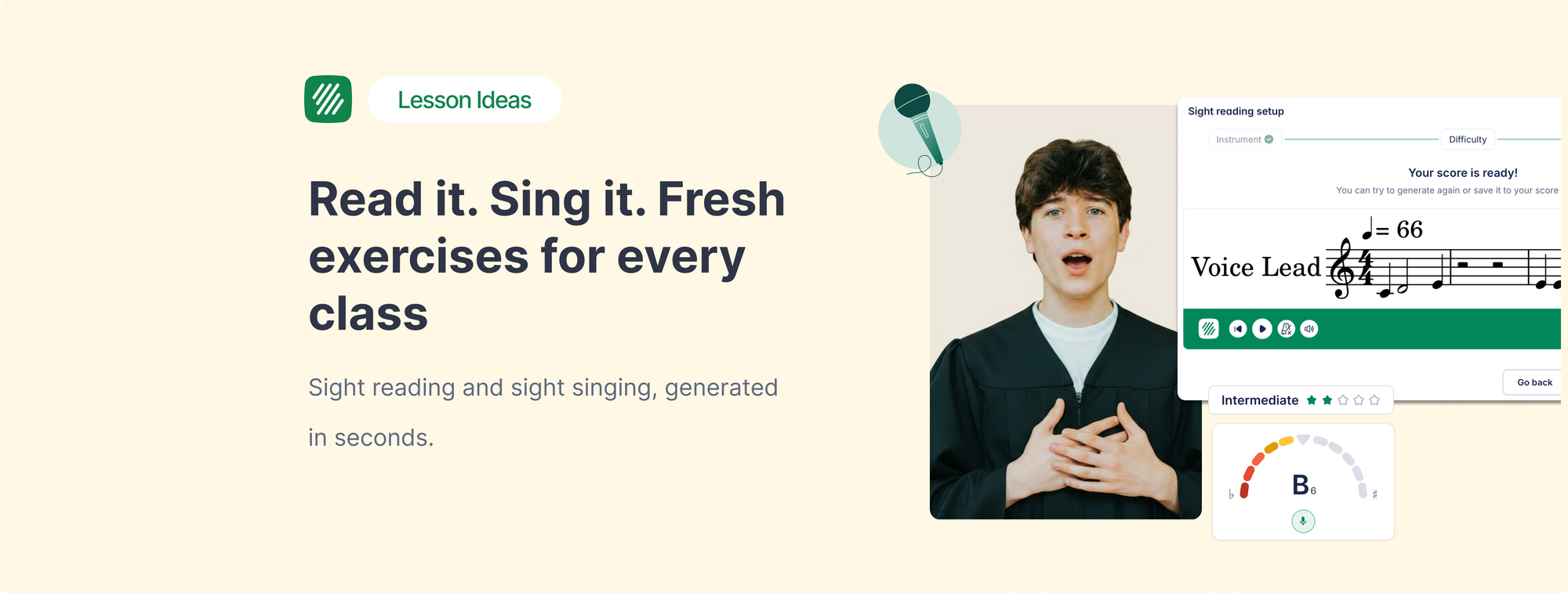
Sight singing is the skill that changes this. And the Flat for Education sight reading generator creates unique exercises that give choir directors fresh material for sight singing every session, without any preparation.
What sight singing actually requires
Sight singing combines pitch reading, rhythmic reading, and real-time vocal production. The voice is the instrument that connects most directly to audiation: students who sing well in tune have usually already heard the note before they produce it. Students who sing out of tune are usually guessing.
This means sight singing development begins with audiation training, not notation training. A student who can hear a major scale accurately in their head, who can audiate a fifth above any given note, will sight sing a diatonic melody far more accurately than a student who knows every note name but has no internal pitch reference.
Build audiation before building notation. The sight-reading generator gives you exercises to connect the two.
👉 Explore Flat for education's step-by-step guide on how to create sight-reading material.
 Noemie Aschenbroich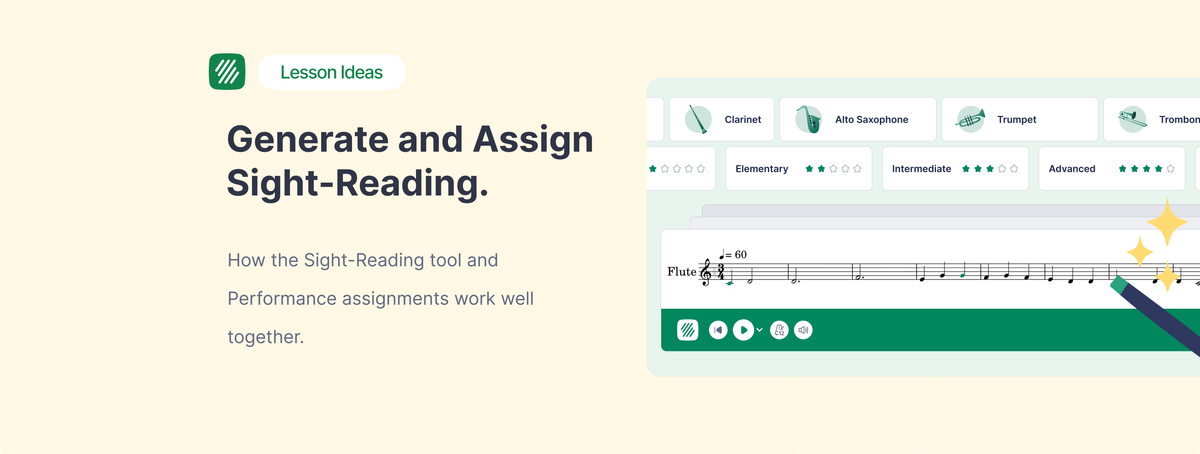
Solfege and the generator exercise
Generate an exercise and ask students to sing it on solfege syllables (Do, Re, Mi, Fa, Sol, La, Ti, Do) rather than on "la" or a neutral vowel. Solfege is a powerful sight-singing tool because it attaches a consistent sound identity to each scale degree. A student who always hears "Sol" as the fifth degree of the scale develops an internal pitch map that is much more reliable under sight singing conditions than note-name reading.
Fixed Do and Moveable Do are both valid approaches and the choice usually depends on your program's existing methodology. What matters is consistency: whichever system you use, use it every time. The sight reading generator gives you fresh exercises to apply it to, so students are always audiating from new material rather than from exercises they've heard before.

Rhythm only first in choir
Project the generated exercise and ask students to clap the rhythm in unison before anyone sings a pitch. Count in, clap through, identify where it gets complicated. Then sing it.
This two-step approach works as well in choir as it does in band. Separating the rhythmic challenge from the pitch challenge lets students master each component before combining them. Choirs that do this consistently develop better rhythmic accuracy in sight singing than choirs that attempt pitch and rhythm simultaneously from the first attempt.
Section sight singing in parts
The generator produces single-line melodic exercises. In a choir context, assign the same exercise to different vocal sections and have them sing simultaneously. The exercise wasn't designed as harmony, but voices moving in different registers produce interesting acoustic results, and the exercise of maintaining your own line while hearing other voices is exactly the skill that part-singing requires.
This is especially useful for soprano and alto sections who often read from the same clef. Having them sight sing the same exercise a third apart, without prior discussion of the harmony, produces both a reading exercise and an ear training exercise simultaneously.

Individual sight singing as a recorded submission
Audition syllables, jury assessments, and state music assessments often include a sight singing component. Use the generator to create individual exercises and assign them as performance submissions through Flat for Education via Google Classroom, Microsoft Teams, Canvas, Schoology, or MusicFirst. Students record at home and submit.
Individual exercises mean every student is reading something they haven't heard before. The recordings give you genuine sight singing evidence rather than group-learned music. Listen for students who are clearly audiating before singing (they'll have brief pauses before pitch changes) versus students who are guessing (they'll produce the note and adjust, rather than landing on it).
The audiation game: hear it before you sing it
This is one worth trying. Project a generated exercise. Ask students to look at measure 1 and hear it in their head in silence. Everyone thinks for five seconds. Then everyone sings bar 1 simultaneously. Move to bar 2. Think first. Then sing.
The first few times you do this, some students will sing before thinking and you'll hear the usual result: approximate pitches, some guessing. After a few weeks of this routine, students who've been genuinely audiating before singing produce noticeably more accurate results. The habit of hearing before singing is the most transferable sight singing skill there is.
Using Flat for Education's practice tools alongside sight singing
Sight singing doesn't happen in isolation. Before a student records their first read, they need to be in tune, at a steady tempo, and anchored to a reference pitch. Flat for Education's built-in practice tools are available in the same workspace:
The tuner lets students check their pitch before recording. The tone generator gives them a reference note to orient to before they start singing. And the metronome helps them set and hold a tempo rather than rushing through the difficult bars.
These tools sit alongside the sight singing exercise without requiring a separate app or tab. A student preparing a vocal sight reading submission can tune, set their tempo, hear a reference pitch, and record, all without leaving Flat for Education.

Flat for Education's sight reading generator creates fresh sight singing exercises instantly for every voice type. Assign individual exercises, collect recorded submissions, and build a termly picture of each singer's sight singing development. Free 30-day trial at flat.io/edu.
Related Articles
👉 How to generate and assign sight-reading assignments
👉 How to run individual music performance assessments for a full class
FAQ
What is sight singing, and why does it matter for choir?
Sight singing is the ability to sing an unfamiliar piece of notation accurately on first encounter, without prior listening or rehearsal. It matters for choir because it determines how quickly a choir can learn new music: a choir that sight-sings can engage meaningfully with new repertoire from the first rehearsal, while a choir that learns by ear needs to hear recordings first, which slows the whole process down.
Should I use solfege for sight singing exercises?
Solfege is one of the most effective tools for sight singing development because it connects each scale degree to a consistent sound identity. Whether you use Fixed Do or Moveable Do depends on your program's methodology and what students have already learned. Consistency matters more than the specific system: students who always associate Sol with the fifth scale degree develop more reliable internal pitch maps than students who mix naming systems.
How do I assess sight singing in a large choir?
Individual recorded submissions through Flat for Education's performance assignment tool are the most practical solution for large choirs. Assign a unique generated exercise to each student, and they record their first attempt at home and submit via your LMS, so you hear a real first read rather than a group-rehearsed performance. The individual exercise removes any chance of hearing someone else's version first, and the recording goes into the gradebook like any other assignment.