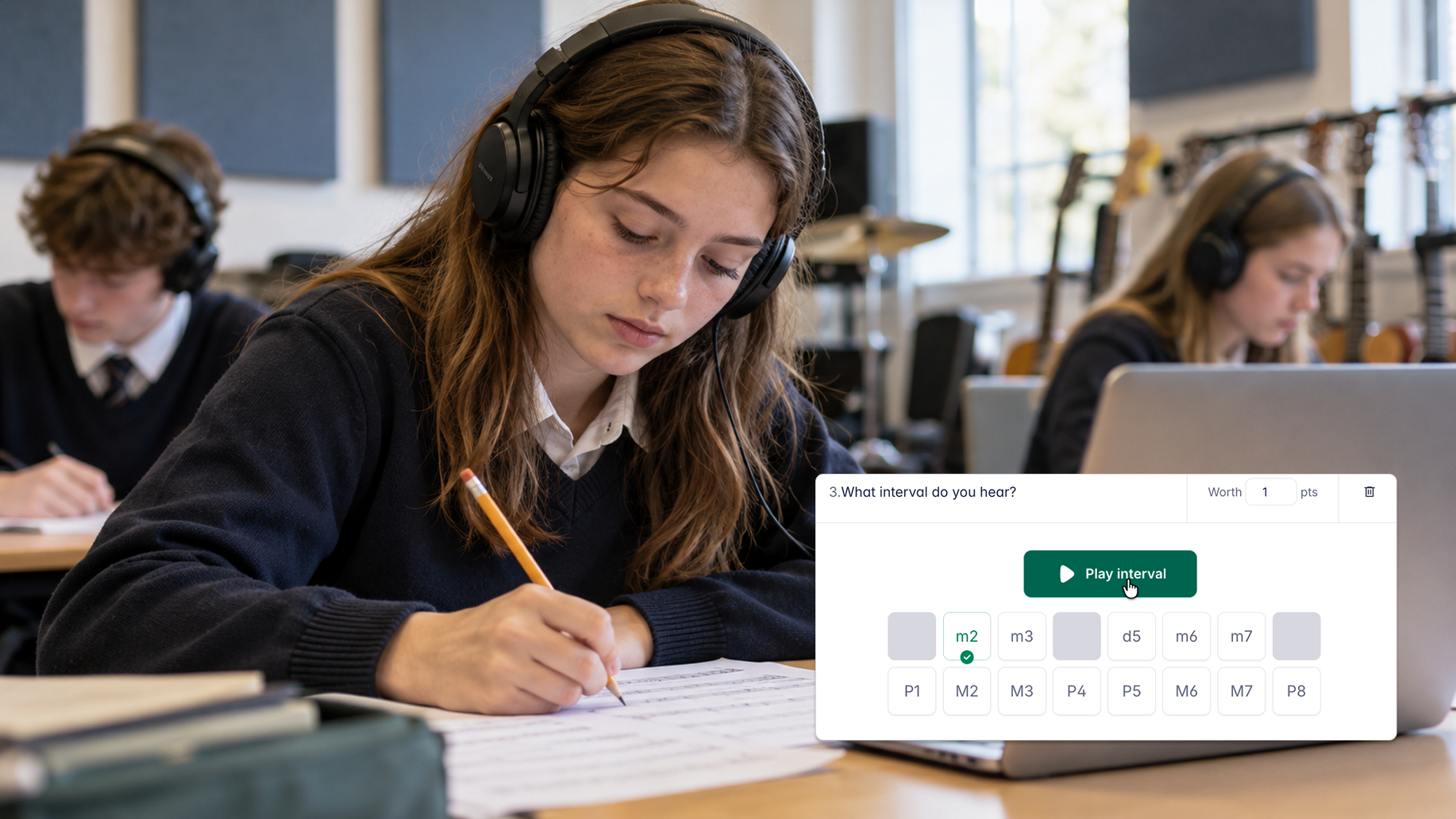
A pupil correctly names a major third on the stave. Play the same interval, and they call it a perfect fifth.
The written answer was right. The connection between notation and sound still needs work.
That distinction makes short theory and aural tasks valuable. They can show you where to focus the next explanation, listening example or composition exercise. The challenge is getting that information without adding another set of books to mark.
Here is a practical routine for GCSE/IGCSE music, with ways to extend the teaching at A level using Flat for Education.
Start with one question about the class
Choose what you want to find out before building the worksheet. For example: can pupils distinguish major and minor thirds in notation, and can they hear the difference?
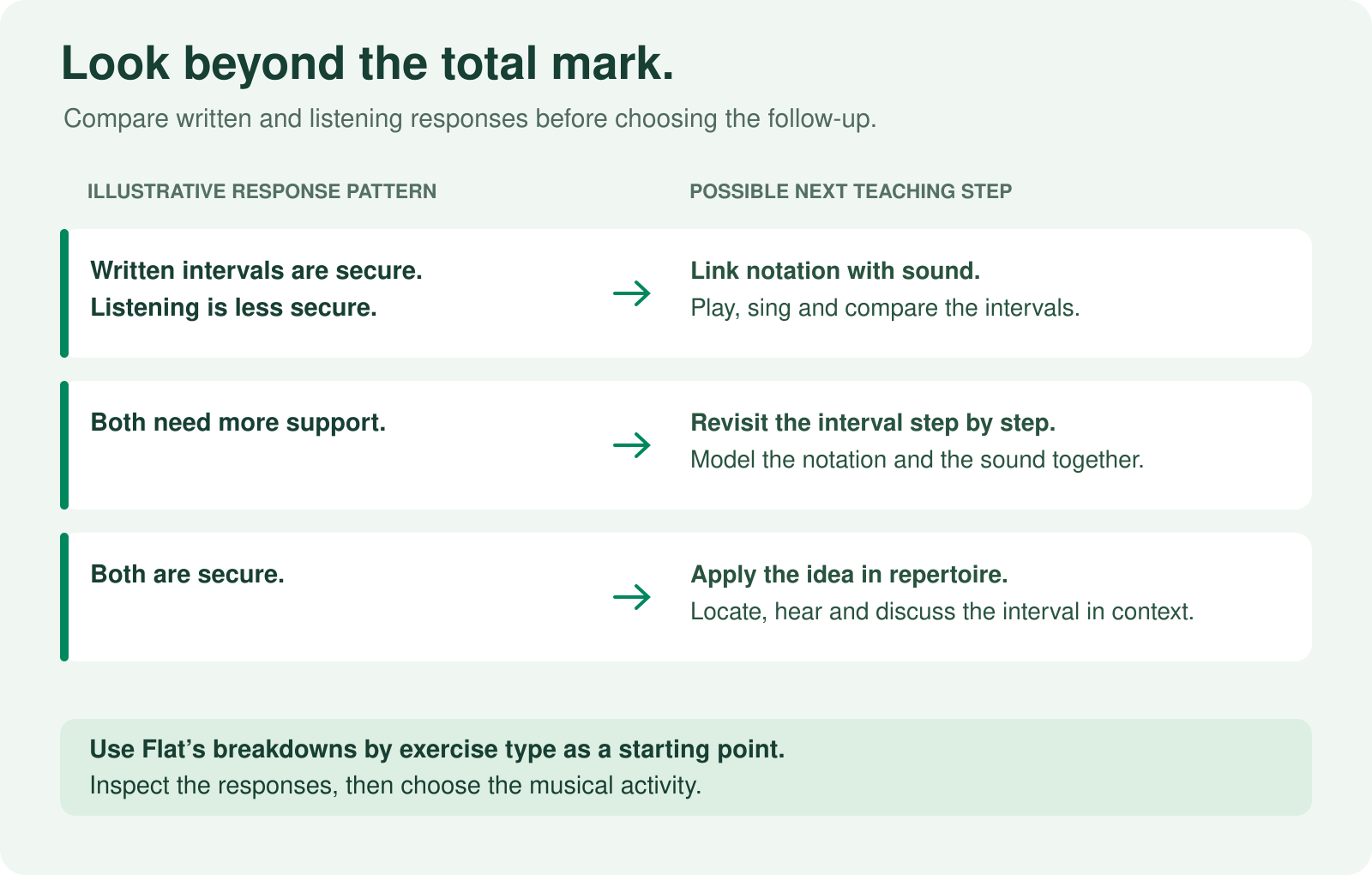
Keep the first check narrow. Use a small set of written interval questions, followed by listening examples. Compare the patterns of responses rather than relying only on a total mark. A pupil who understands neither needs a different response from one who can read the interval but cannot yet recognise its sound.
Flat for Education's theory worksheets include interval, key, chord and rhythm exercises. Its auto-marked ear-training worksheets focus on interval identification. The results view includes breakdowns by exercise type, helping you decide where to look more closely.
Turn the result into a musical activity
Suppose the class is secure on written thirds but less confident identifying them by ear. Try this follow-up:
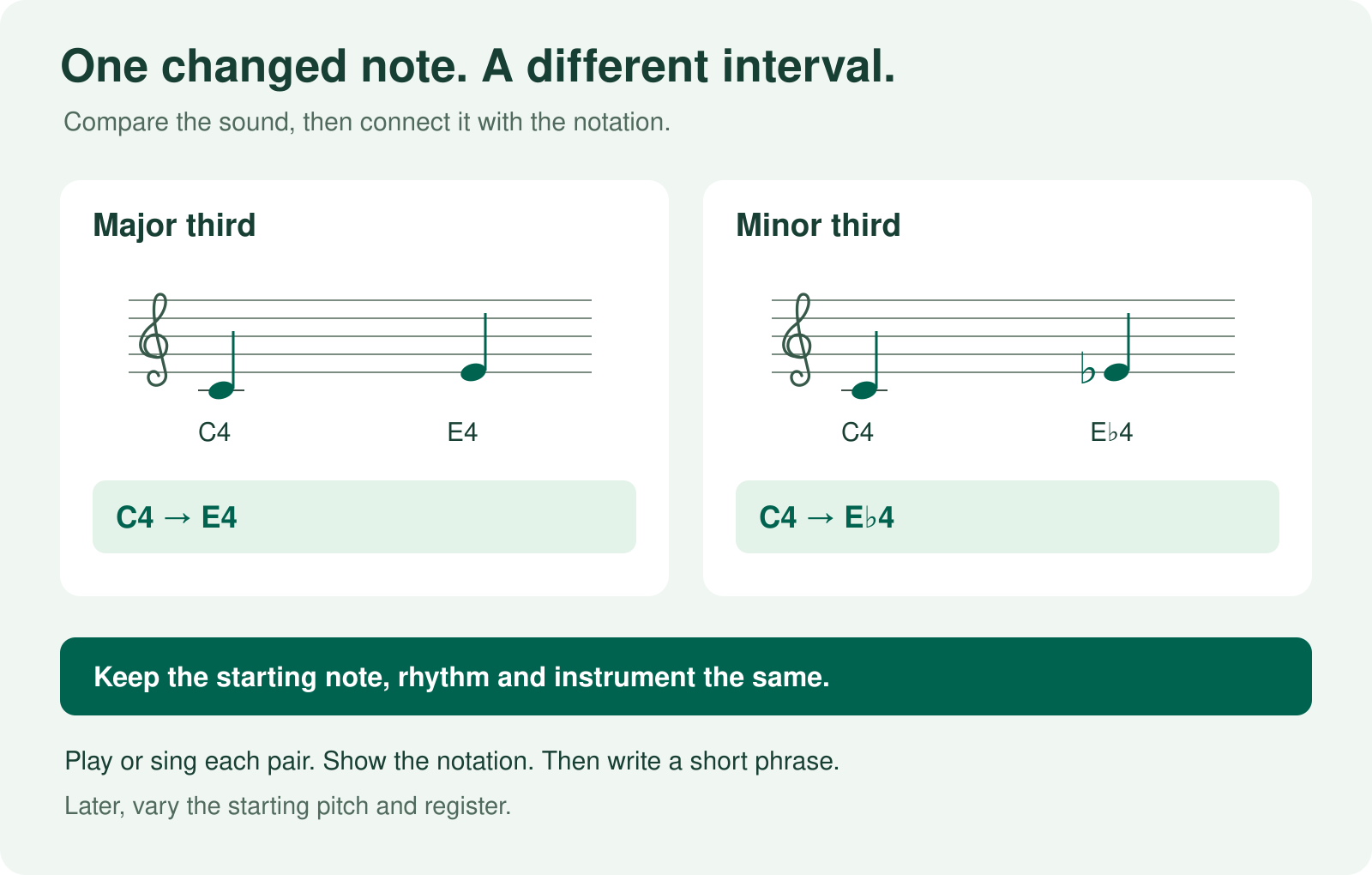
- Play C4 to E4, then C4 to E-flat4, using the same rhythm and sound.
- Ask pupils to sing or play each pair back where practical.
- Show the notation and connect the sound with the changed note.
- Ask pupils to write a short phrase using each interval.
- Play the phrases and discuss how the interval works in context.
Begin with the same starting note to make the comparison clear. Later, vary the starting pitch and register so pupils cannot rely on one familiar example.
The worksheet identifies a question worth teaching. Listening, performing and composing give pupils different ways to explore the answer.
Connect the practice to repertoire
Return to a phrase from the music you are studying. Ask pupils to locate an interval they have practised, hear it in the extract and describe its role in the line.
Keep the musical question in view. Does the leap help the melody reach a high point? Is a repeated interval part of its character? Could changing it alter the effect?
This supports the foundations of listening and appraising while keeping the wider task intact. Recognising an interval is useful; explaining what is happening in a passage also requires context, vocabulary and close listening.
Extend the same routine at A level
For sixth-form students, start from a more demanding question about the repertoire. Can they hear the arrival in a new key? Which evidence supports that interpretation? Can they distinguish a brief tonicisation from a more established modulation?
These are teacher-led listening and analysis activities. The automatic interval worksheet is one tool within a broader approach.
You can also create custom listening tasks in Flat. Its dictation guide shows how to combine audio with an incomplete score, lock supplied notation and set playback limits. That creates another route from hearing to writing, with the teacher choosing the material and reviewing the response.
Keep the routine small enough to repeat
Try one short check at the start of a lesson, one focused follow-up and a return to the concept later. Adjust the frequency to your timetable and the class's needs.
If pupils have limited access to devices, demonstrate examples from the teacher account and collect responses on paper or through discussion. Use individual online worksheets when you want pupil responses recorded and marked digitally.
You can begin by preparing a worksheet yourself. There is no need to introduce every feature or move the whole course online to evaluate whether the activity helps.
Try a short interval worksheet
Choose the intervals you want to check, prepare a worksheet and plan one listening activity to follow it. When you assign it online, use the responses to choose your next teaching step.
Start your free 30-day trial and explore a worksheet before introducing it to your class.
To connect the same concept with creative work, read GCSE music composition ideas pupils can build on in this series.
FAQ
What does Flat for Education's automatic ear training cover?
The documented ear-training worksheet activity is interval identification. Custom listening and dictation tasks can support other teaching, but should be distinguished from those auto-marked exercises.
Do these worksheets cover the GCSE appraising examination?
They support selected theory and listening foundations. Use them alongside the repertoire, unfamiliar listening, musical vocabulary and responses required by your specification.
More in the UK GCSE and A-level series
- GCSE music composition ideas pupils can build on
- How to teach GCSE and A-level composition beyond the first eight bars
- Recording GCSE and A-level music practice so feedback leads somewhere
- Best music notation software for UK schools in 2026
- Using Flat for Education and Music Snippet for GCSE and A-level music